
FAST FASHION'S GRAVEYARD | Ian Berry in the Atacama Desert Chile
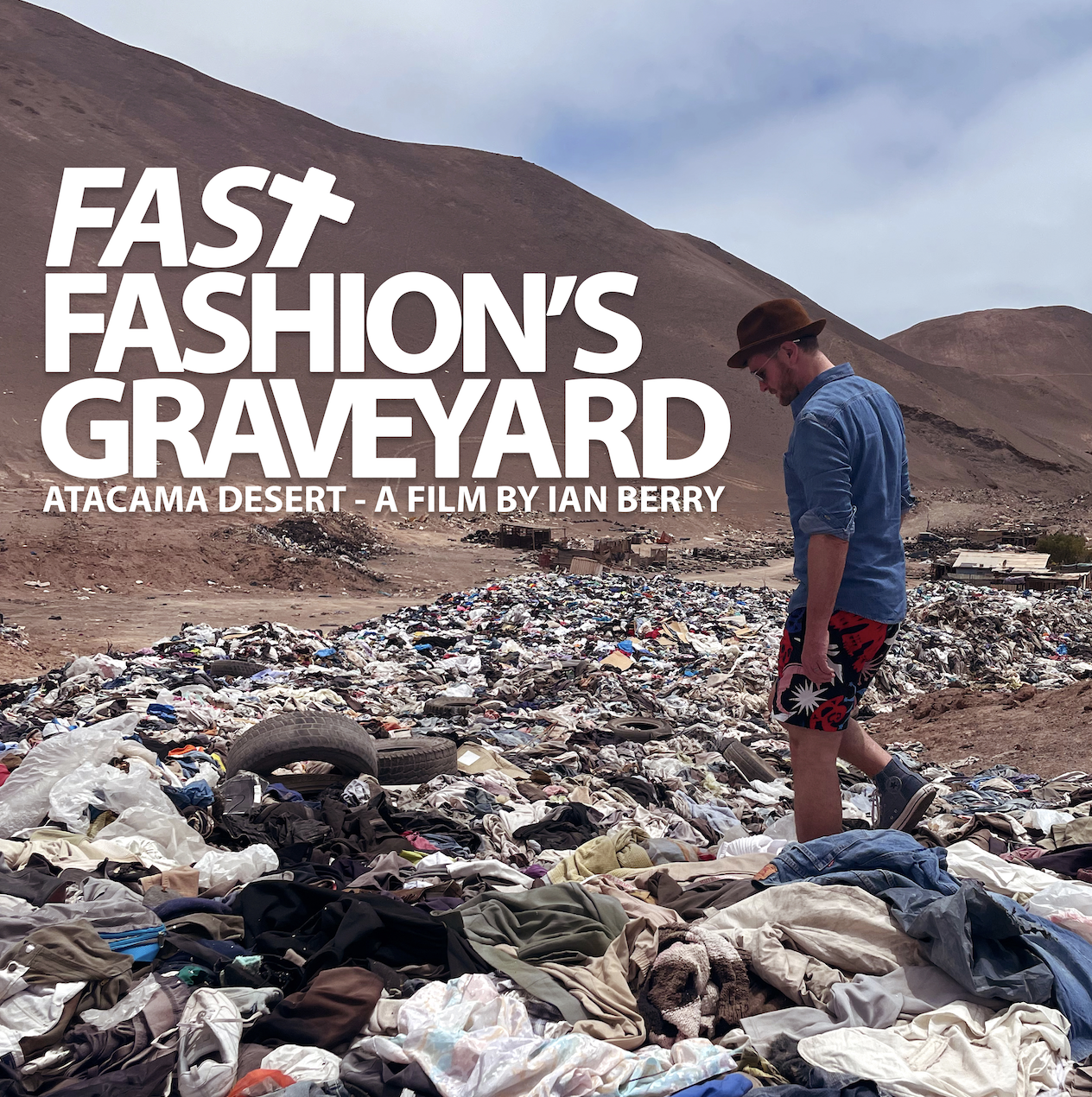
Fast Fashion’s Graveyard
A documentary film by Ian Berry - COMING SOON
- Artist Ian Berry makes a documentary about the clothes waste in the Atacama Desert in Chile named Fast Fashion’s Graveyard
- A three-minute trailer will preview in New York with Fashinnovation on 7th Sept – where Ian Berry will be interviewed by Christopher Blomquist, Rivet Journalist and Professor of Fashion Journalism at Parsons School of Design
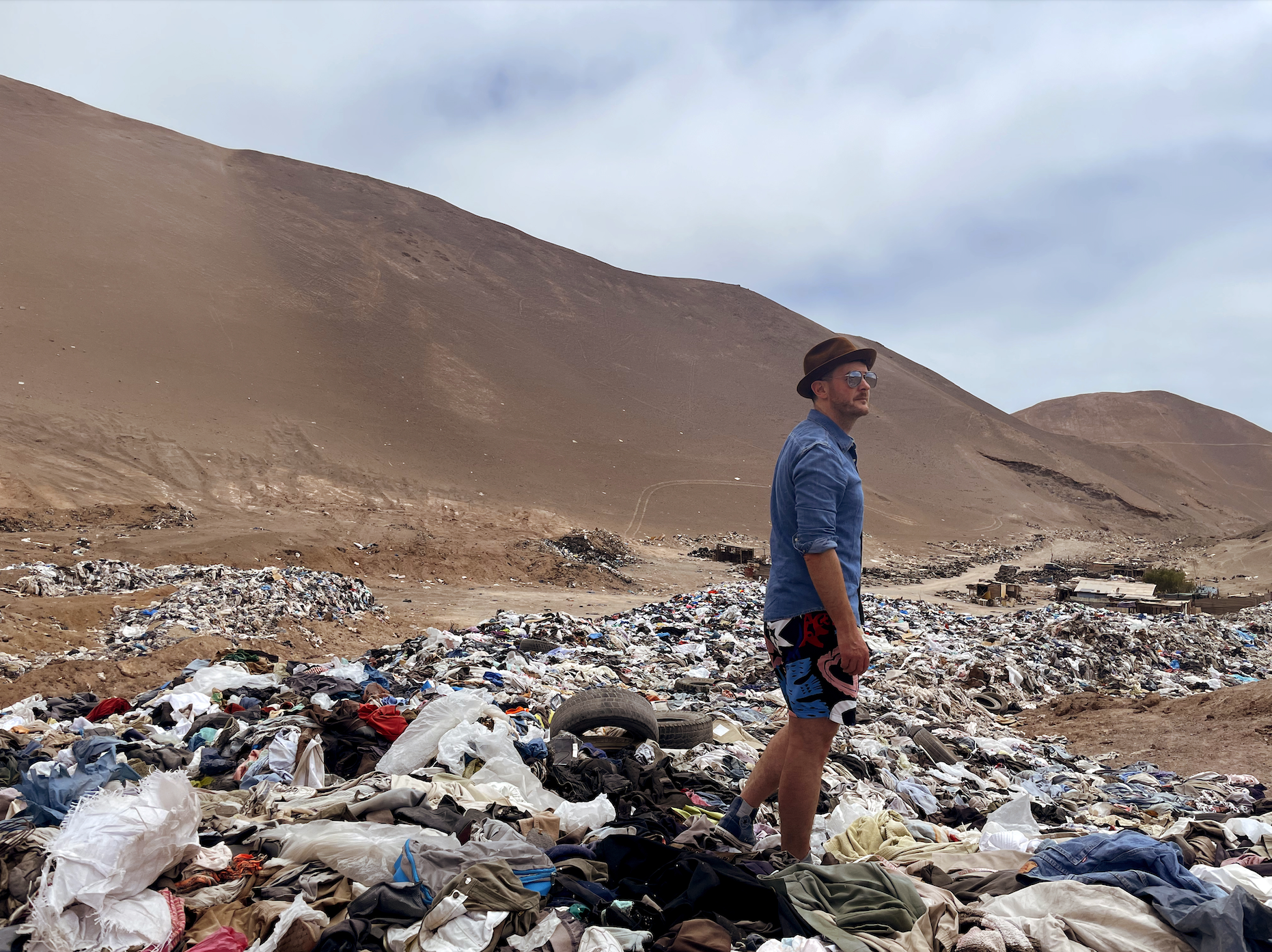
Ian Berry in the Atacama Desert in Chile
British Artist Ian Berry, 38, has often been linked with sustainability over the years but it’s a word he has never tried to use with his art made from recycled jeans ‘It was a side show of my work, but not the concept’. That seems to have changed after he witnessed the direct impact of overproduction of garments and the clothes mountains discarded in Chile.
‘Sustainability is an overused and abused marketing word which has as much worth as the word ‘nice’. I felt a fraud to use it, besides, I’m not making a big difference, nor had it been the concept or point of my work. I have been doing my work for longer than it became such a buzz word. Perhaps I’m just jaded by knowing too many people abusing it’
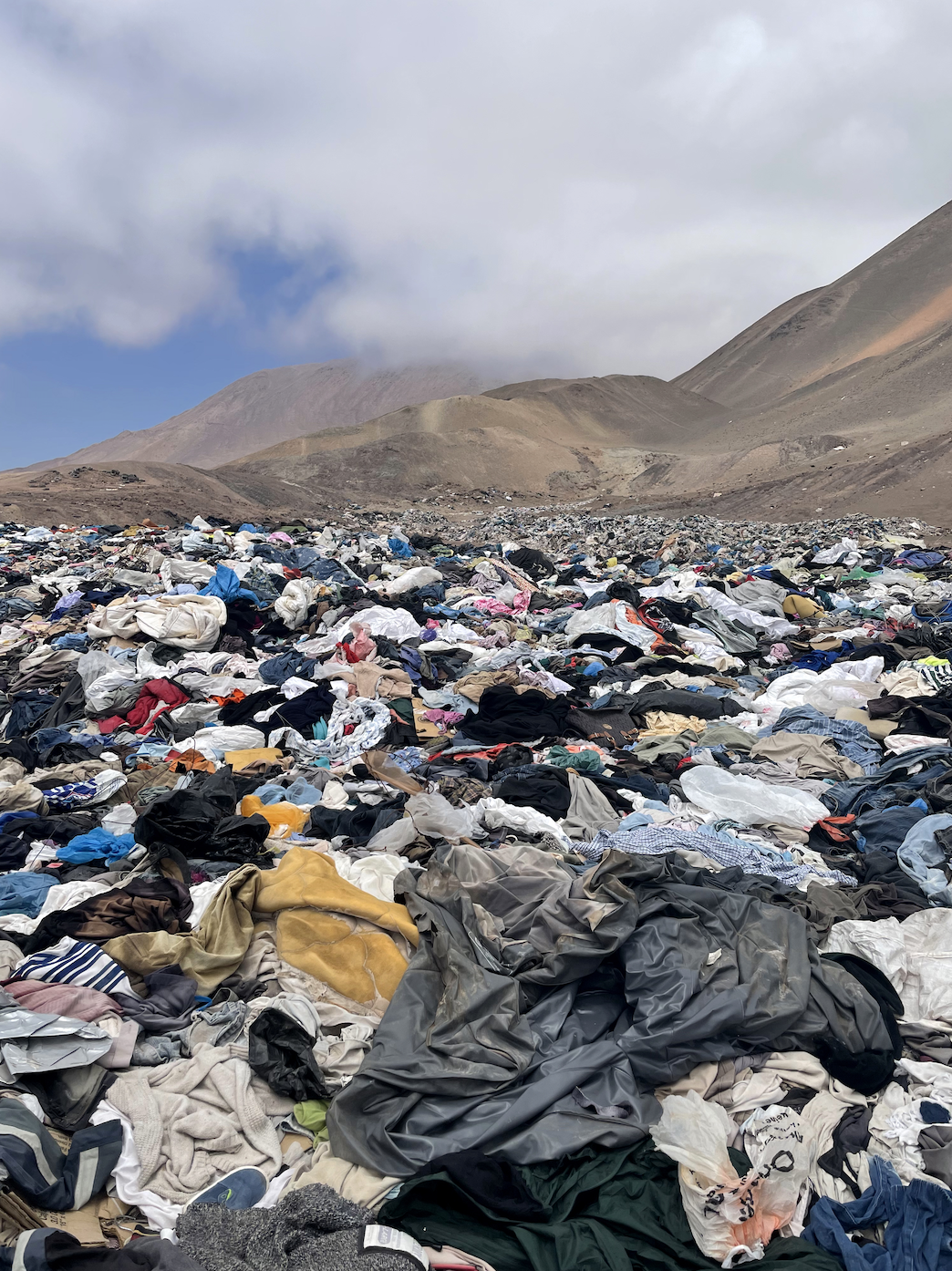
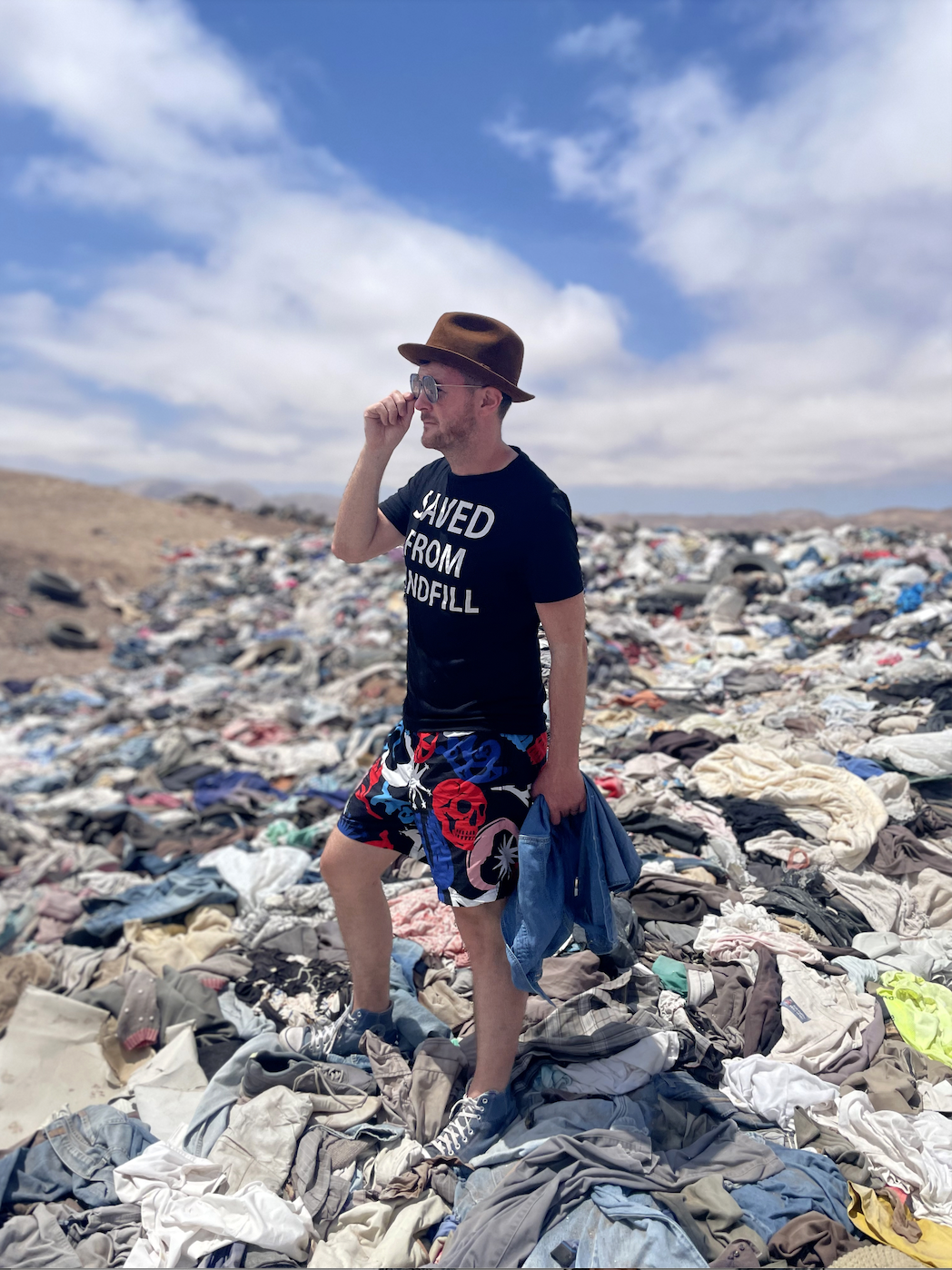
Earlier in the year however he found himself in the country’s capital, Santiago, having created the portraits of three of Chile’s most popular musicians which were then presented at Lollapalooza. In between some events he had some free time and he was offered a trip away. He’d seen the clothes dump in the Atacama Desert outside Iquique in Alto Hospicio that had just gone viral and was seen on the likes of BBC and DW. Snubbing much more obvious travel destinations he opted to visit the northern coastal city, known as the driest on the planet.
Seeing the piles of jeans in his East London studio it’s hard to not see the comparison with what he saw in the barren desert.
‘While I may not talk about sustainably much, leaving it to those who either know better, or can profit from it, it doesn’t mean I don’t care about the core issues. Few know that I nearly went back to university in 2006 to study climate change after watching An Inconvenient Truth by Al Gore, but while I was recycling denim, I will be honest, I never even connected that I was doing anything linked at the time.’
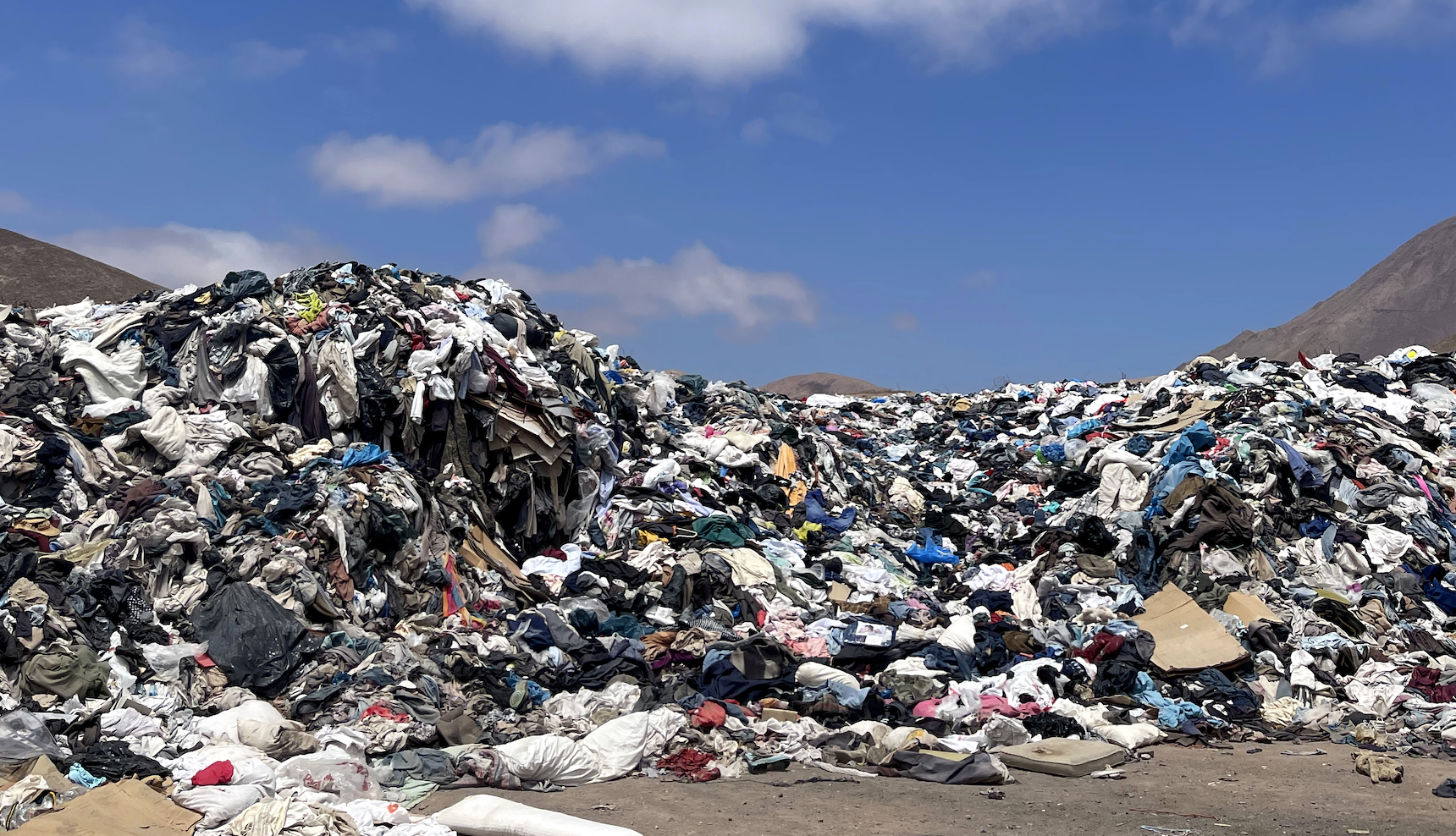
Piles of clothes in the Atacama Desert in Chile. Photo Ian Berry
He has now returned to the South American Country twice more, both linked to ongoing projects as well as trying to find out more about what is going on and why many of our old clothes ended up in Chile, unwanted and left to rot. While he will soon preview his documentary ‘Fast Fashion’s Graveyard’ he will openly admit he is not a documentary maker and on the first trip it happened quite naturally. ‘I was taken aback by being there and just started to make little videos with my iPhone. I hadn’t intended to make a documentary and it’s been quite a learning curve.’
‘I’d researched it a lot before I first went but when there I had so many questions, many that people couldn’t answer. I also realised that there were very few people, if anyone, from outside South America that had ever gone there and when it had gone viral it was all from one person’s footage (who had himself done great work), but then the reporters had never been. While I don’t think it was on purpose, the reporting led to a misrepresented story of what was going on and who was responsible, mainly letting the viewer believe the brands were directly dumping their clothes there. It’s much more complex, and I had to return to find out more.’
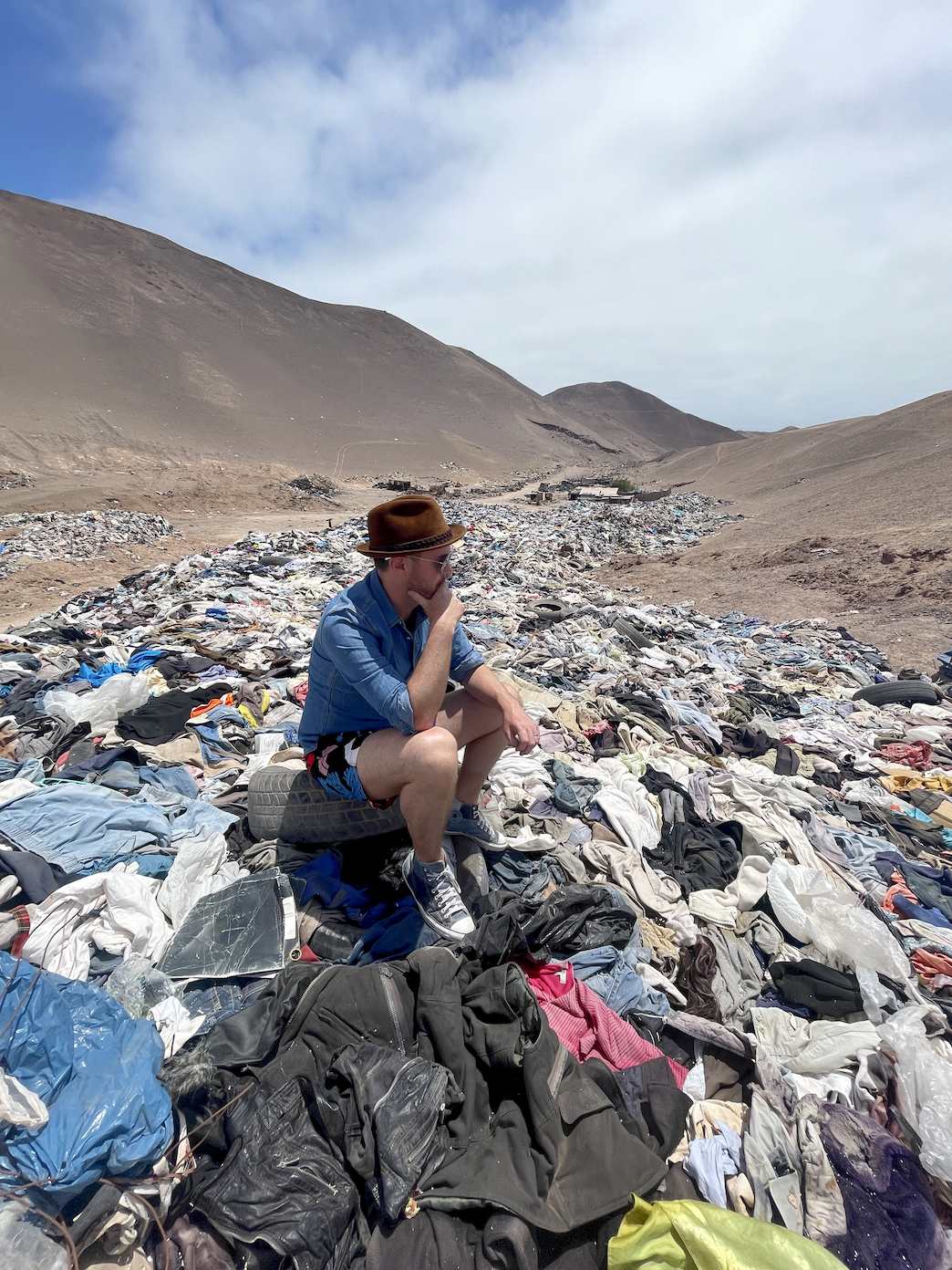
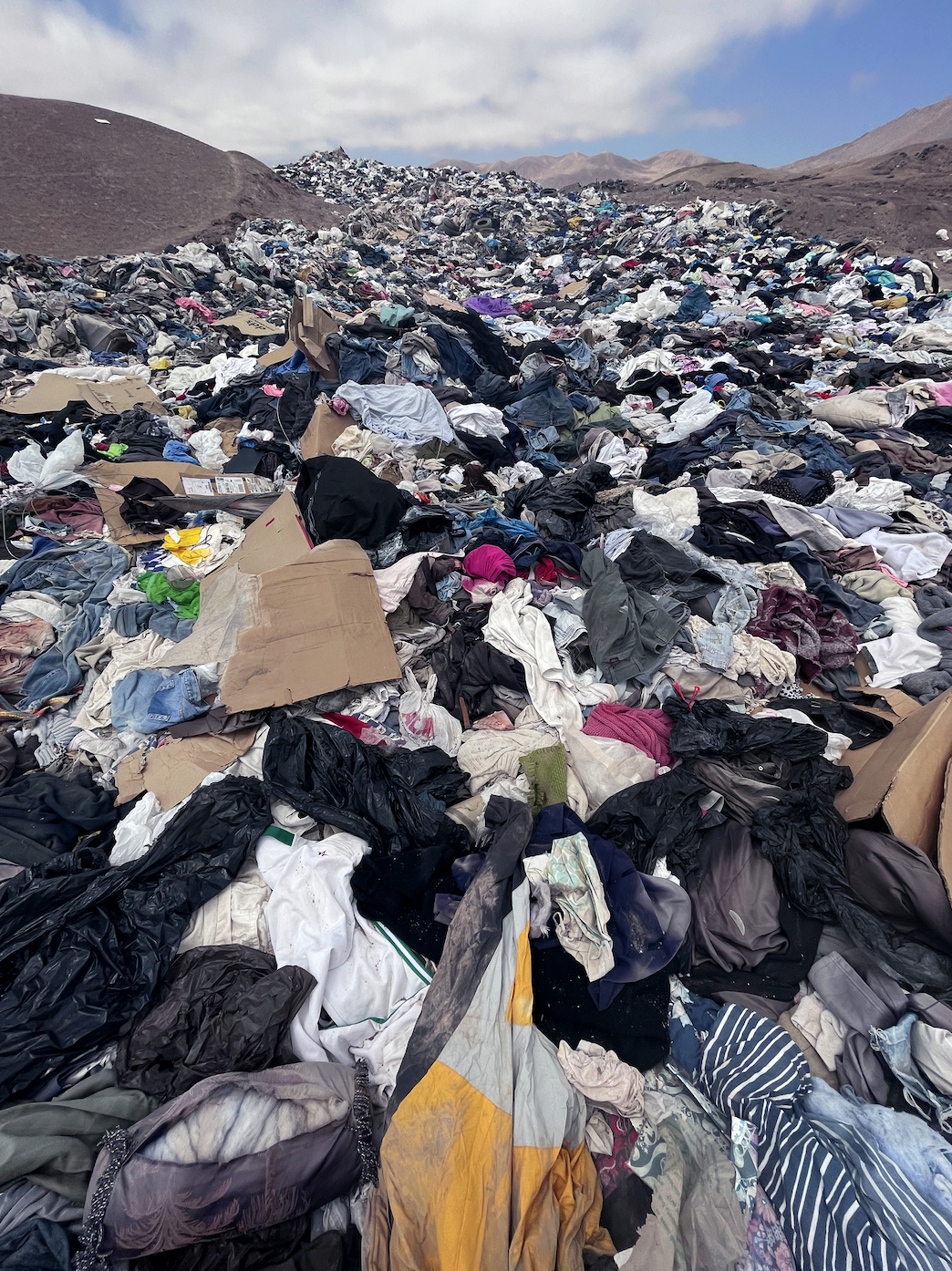
Ian Berry in the Atacama Desert witnessing himself the clothes waste piled up
Agence France-Presse,’s research found that about 59,000 tons of clothing that wasn’t sold in Europe or the USA end up at the Freeport of Iquique every year, but what’s surprising is a whopping percentage of that, at least 39,000 tons are moved into landfills in the desert typified by the one Ian Berry visited in Alto Hospicio the country’s poorest area.
‘Like everything in contemporary times we debate on headlines and there’s little nuance. I wanted to look into the story to find the truth, but also I’d seen it talked about many places yet with few solutions or positive messages of what people are doing, or what people can do.’
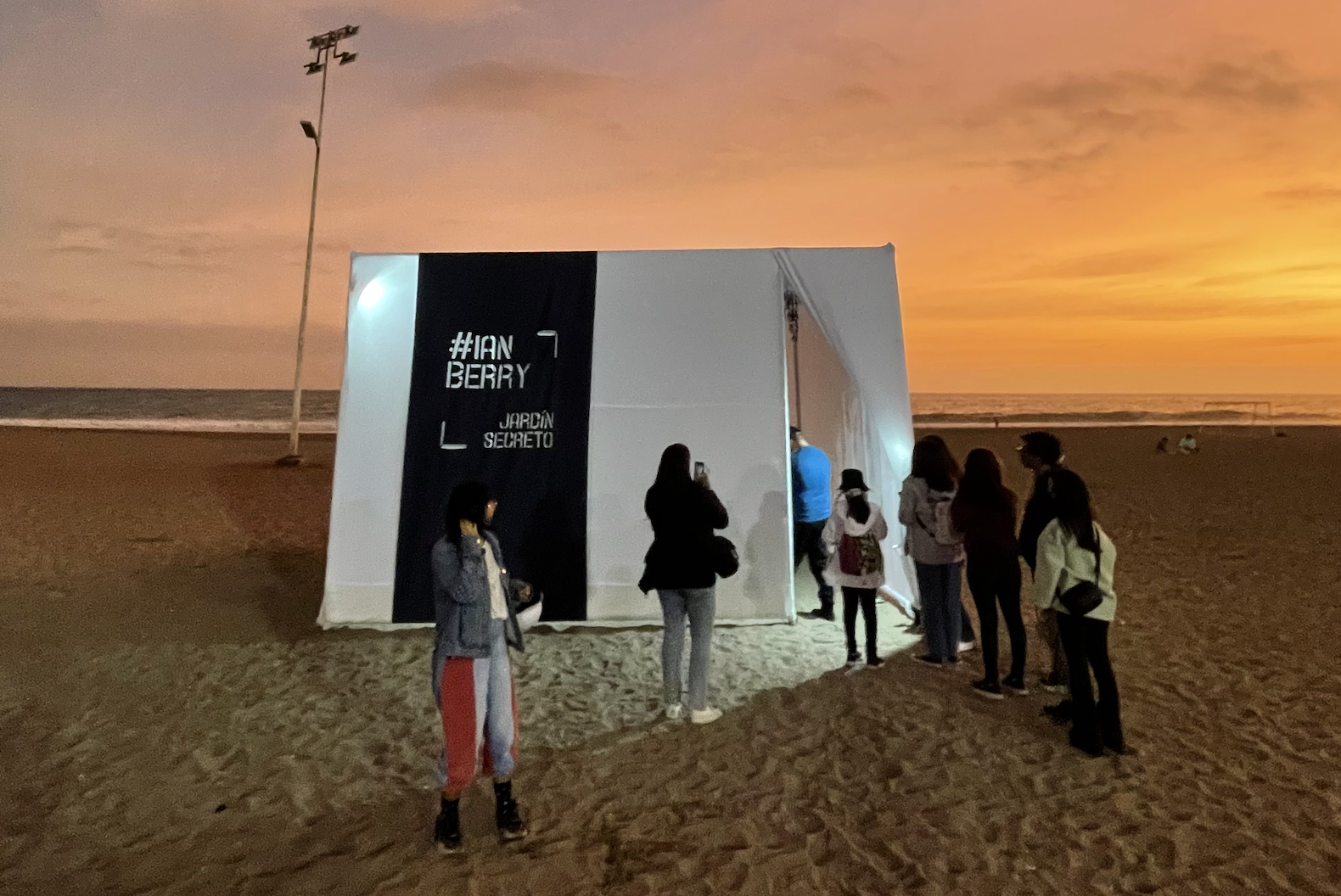
Ian Berry showed an installation on the beach in Iquique with Studio of…
On Berry’s second visit he worked with Estudio of.. in Iquique. A collective of creatives and artisans who have been working with recycled textiles and most proudly sporting second hand clothes. They grouped together to help Ian Berry make flowers for a recreation of his Secret Garden installation that was then displayed on the beach in the city during the Festival Desierto Sonoro with thousands of people passing through.
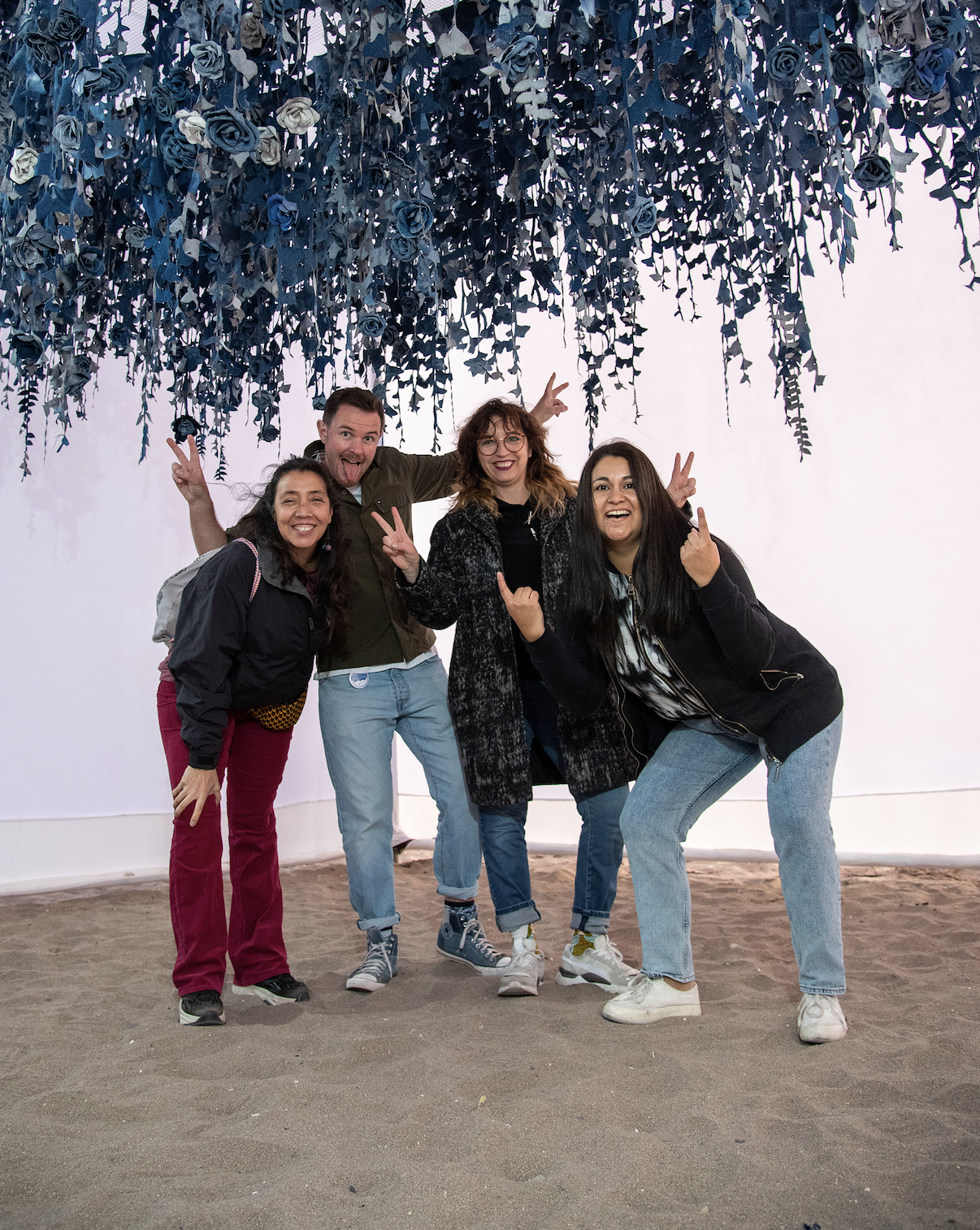
Ian Berry with some of Studio of…
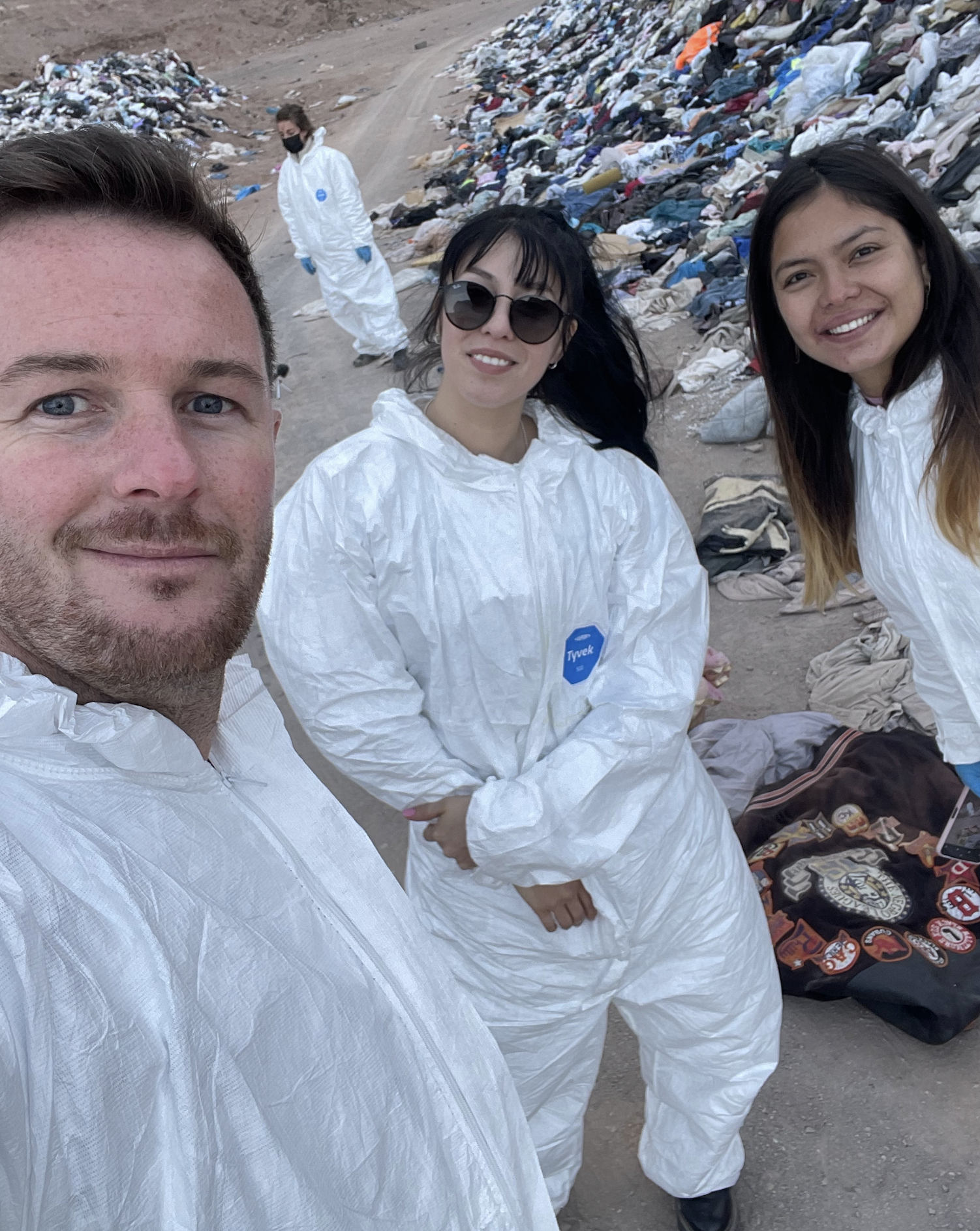
Ian Berry with Desierto Vestido
One member of the collective that worked with Berry was Angela Astudillo, who is also a part of Desierto Vestido who have been investigating this for a while now. She lives close by the dump and has visited many times and she went with Ian Berry when he returned and helped him with many of the facts. She has documented much of what has been going on. While he started with an iPhone, on the second trip Berry had a more professional kit supported by Audiovisual Iquique who, with drones, were able to capture the scale.
Astudillo was also able to introduce the artist to the people that live on the site which enabled him to ask direct questions of what is going on and why.
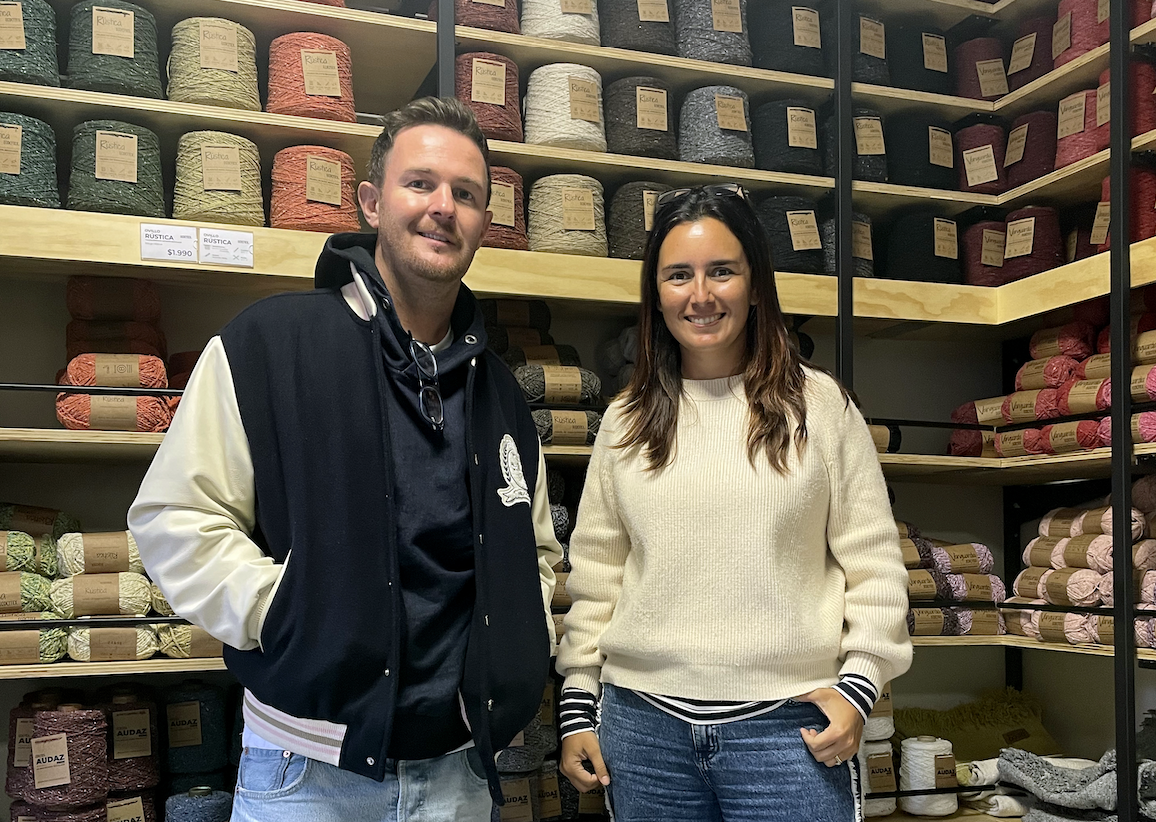
Ian Berry with Rosario Hevia of Ecocitex in Santiago, Chile looking at her recycled yarn
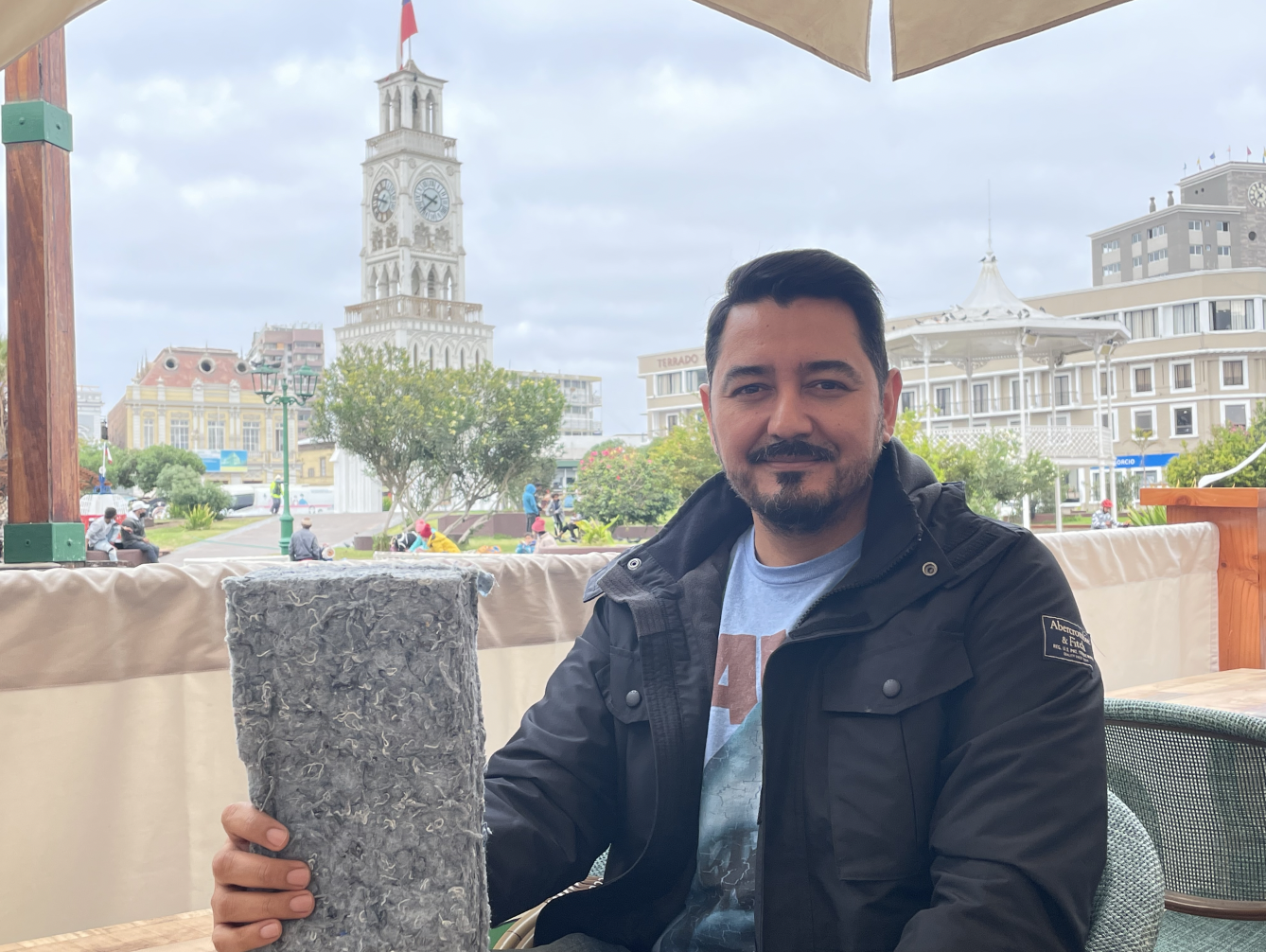
Frank Zepeda of Ecofibre Chile in Iquique with Ian Berry
For Berry it was important to find positive stories and to share them. Highlights were meeting with Franklin Zepeda of Eco Fibra who transforms the textile waste into insulation panels for low cost housing and as a native of Alto Hospicio could tell Berry much of what had been happening. Gonzalo Muñoz who was nominated by the Chilean presidency and the United Nations as the High-Level Climate Champion for the twenty-fifth Conference of the Parties (COP25) to the United Nations Climate Change Convention (UNFCCC). Prior to this role, he co-founded and ran TriCiclos, one of the most recognized Latin American companies in the circular economy and recycling. The company was also the first certified B corporation established outside North America.
Ian Berry met with Rosario Hevia twice, in Santiago who passionately spoke about the issues as well as showing Ian around her factory where her brand Ecocitex is a social enterprise that sells 100% recycled textile products through more than 250 women-led businesses across Chile.
The documentary shows Berry visiting the Freeport locations and Zofri, the area where the clothes are brought in in bundles and sold, under much secrecy. While the imports had been portrayed as a bad thing, he also visited resellers in Santiago as well as second hand stores that sell good second-hand clothes making them affordable for many Chileans and of course making the clothes life span longer.
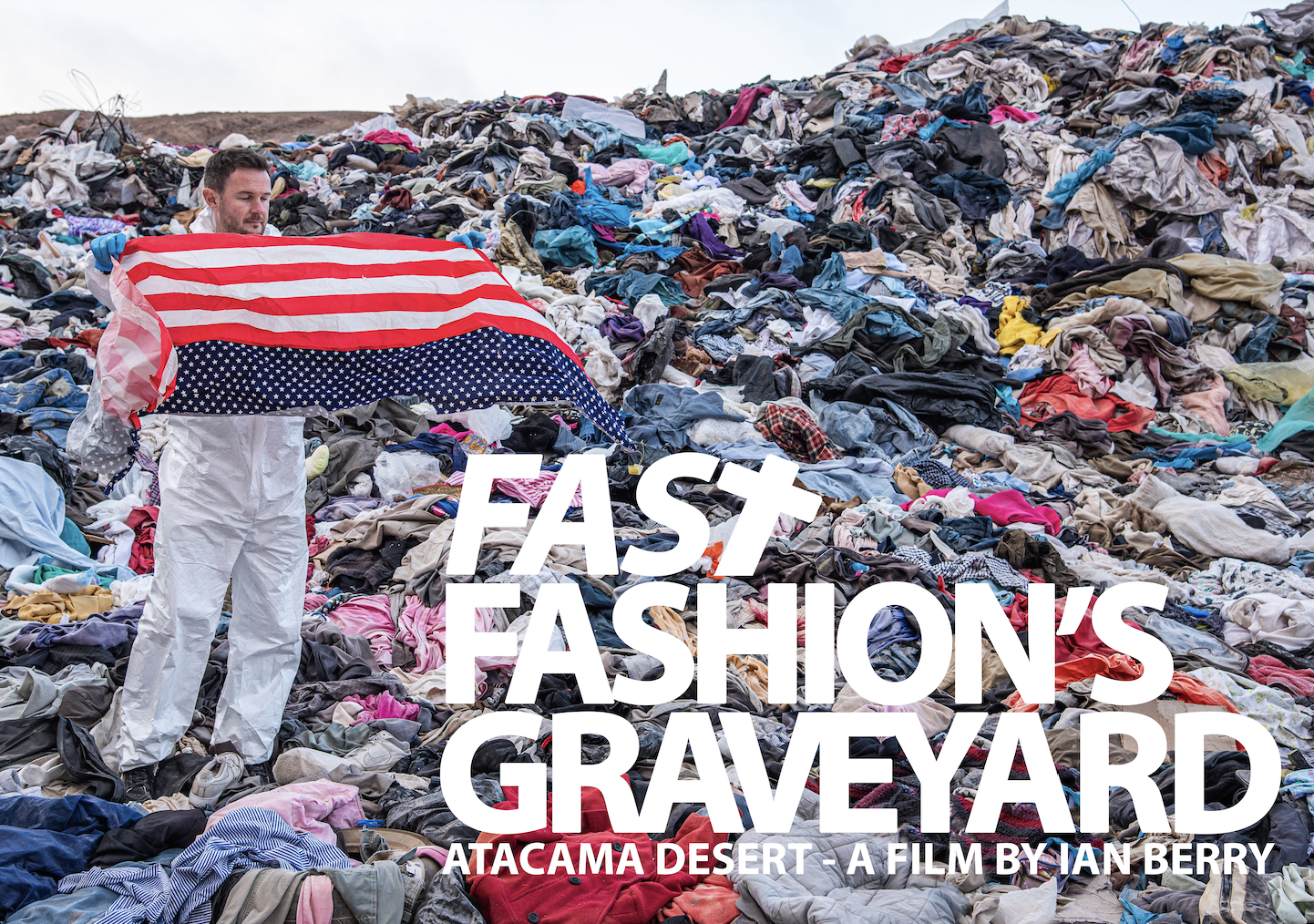
In his research Ian Berry also found he had jumped the gun a little, ‘The name already can give a misconception’, although one part became true. Fast Fashion Graveyard. ‘Soon after I left the third time it set on fire and then it was buried, so it went from an open grave to being concealed.’ However, he questions whether it is fair it is named fast fashion as in his research he found that while many big name brands could be found, they are not the ones that he thinks fall in the fast fashion bracket.
‘I think most people watching the first wave of publicity brought on the dump blamed fast fashion and big-name brands, I went around and found that all the items were unique, as in there wasn’t batches of the same clothes. While many had labels on they were often the likes of TJ Maxx and also Goodwill. Yes, we can talk of overproduction and also our throwaway society and trends, fair is fair, but it is not the brands who are directly responsible. That said, it is their name on the labels and our clothes dumped there – often after thinking we have done a good thing in donating to a charity shop.’
A three-minute trailer will debut at Fasinnovation in New York on Sept 7 in partnership with Spring Studios - with an interview filmed live at 11.55 EST with Christopher Blomquist, Rivet Journalist and Professor of Fashion Journalism at Parsons School of Design.
Founder Jordana Guimaraes who invited Ian Berry said, ‘Ian is just extremely talented and inspiring, and I feel SO lucky to have him with us next week sharing this project and opening people’s eyes in so many ways.’
For more Information and to register
https://fashinnovation.nyc/events/worldwide-talks-2022-7th-edition/
Ian Berry X Canary Wharf for Earth Day
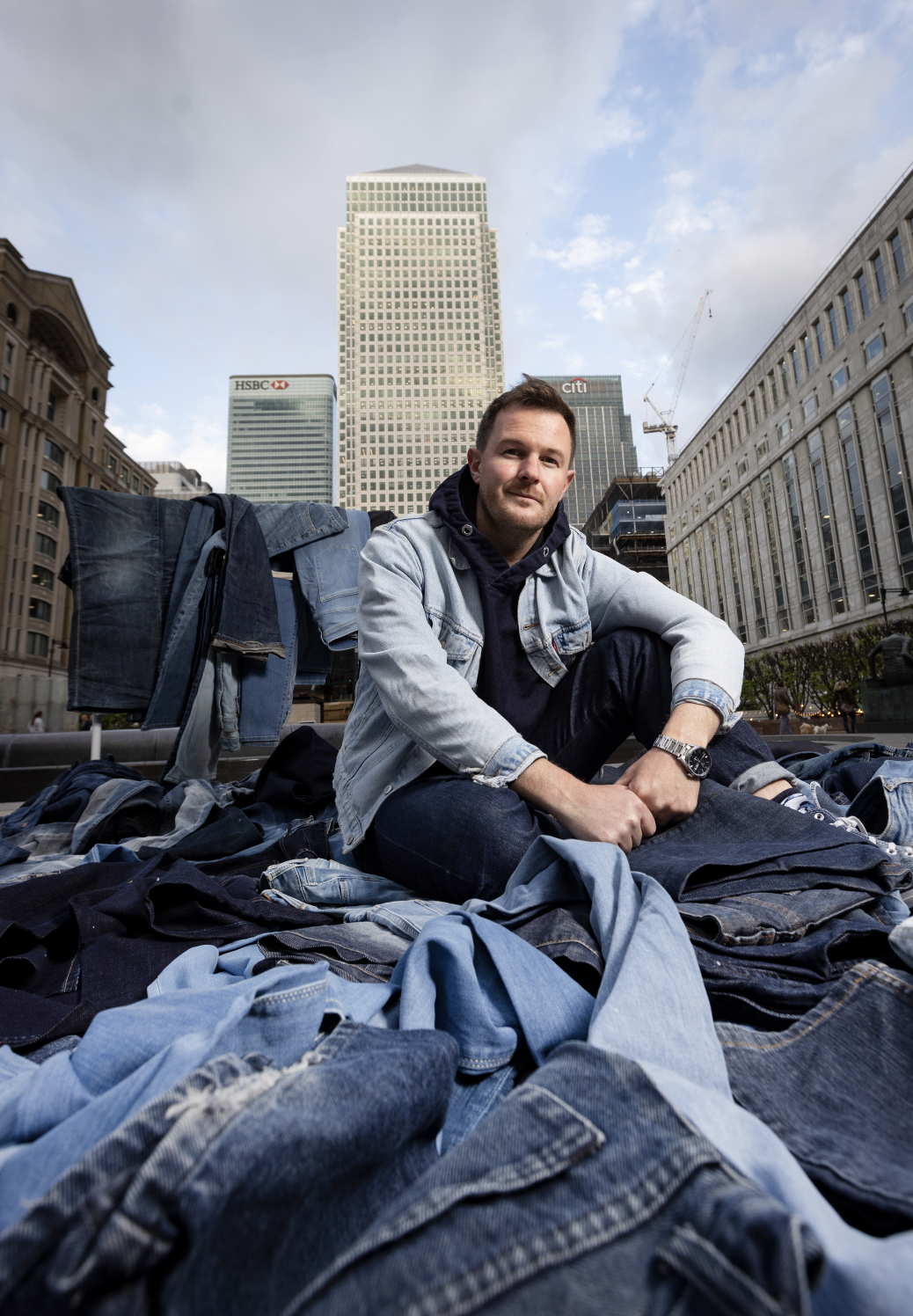
Swap Station: Canary Wharf Shoppers’ Second-Hand Clothes to be Transformed into Art for Earth Day – 20.04.22
New clothes donation bank will sit in Jubilee Place mall from 20-27 April, where shoppers can donate old clothes in return for shopping vouchers
The Swap Station was designed by artist Ian Berry, who will create an exclusive new art piece with the second-hand garments
Remaining clothes to be donated to Love Not Landfill
Canary Wharf has announced the launch of its new Swap Station for Earth Day – a clothes donation bank that lets shoppers swap their old clothes for shopping vouchers from a range of retailers in the malls.
The striking installation will sit in Jubilee Place mall and has been designed by the artist famed for his work with denim jeans, Ian Berry. Berry will transform the donated denim jeans, jackets and accessories into a piece of exclusive new art that will hang in the mall, with the new artwork unveiled in June to coincide with World Environment Day.
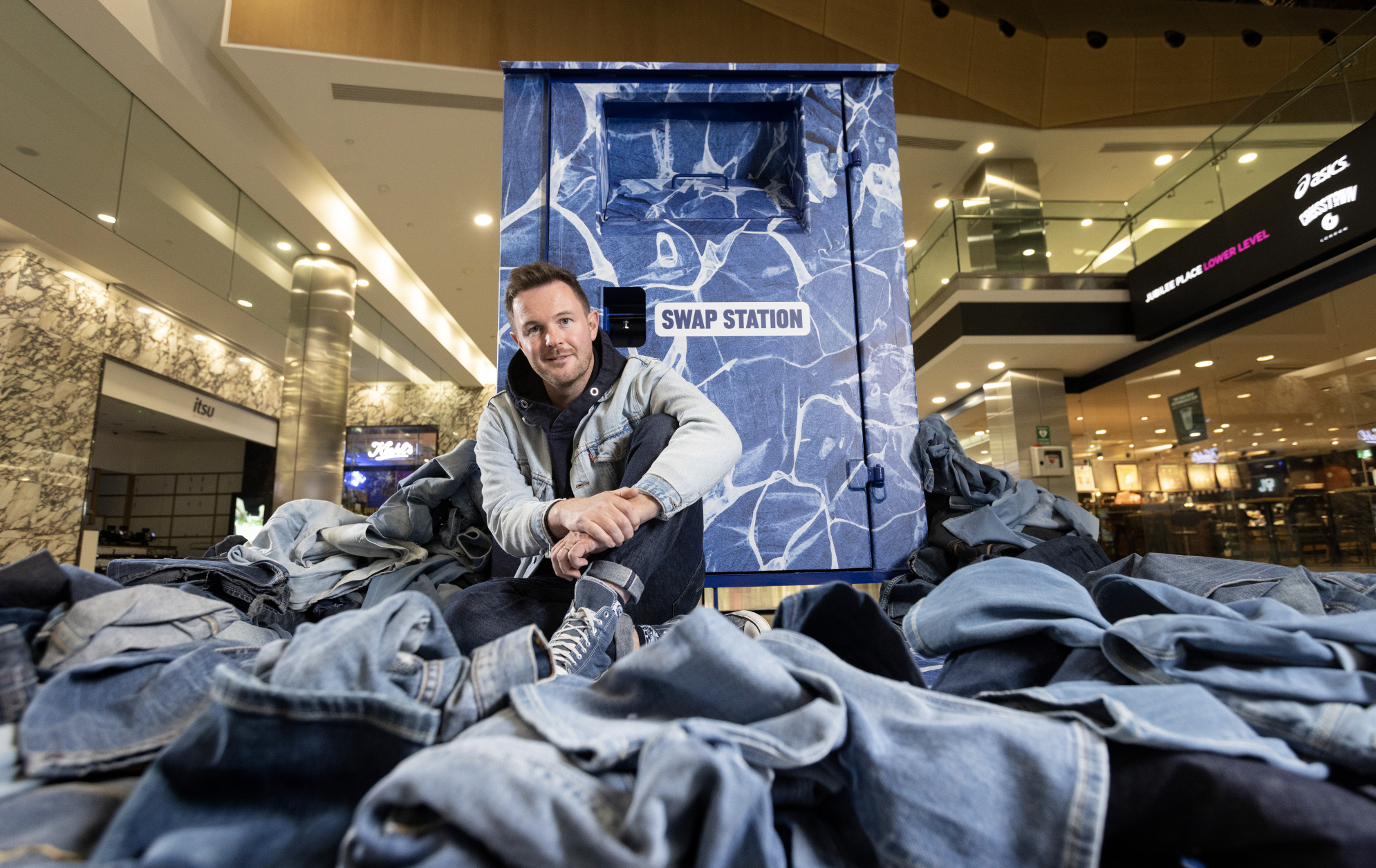
Ian Berry at the Swap Station in Canary Wharf
The Swap Station opens to the public for a week from Wednesday 20th April. In return for their old clothes, shoppers will be rewarded with a voucher redeemable at selected stores across Canary Wharf.
Any clothes not used for the new artwork will be donated to Love Not Landfill, a non-profit campaign to encourage fast fashion fans to buy second-hand, swap, recycle and give to charity.
More than 300,000 tonnes of clothing end up in landfill each year in the UK[1] , many items of which could be re-worn or recycled. The Swap Station will give a new lease of life to the clothes donated and forms part of Canary Wharf’s ongoing investment in public art and sustainability. Berry’s final piece will join over 110 permanent works by over 50 international artists currently around the Estate, making Canary Wharf a rich tapestry of diverse artwork.
Poplar-based artist Berry is world renowned for his work turning old denim into striking visualisations, notably creating celebrity portraits including Debbie Harry and Georgio Armani. He is known for intricate works depicting real life in collections including Behind Closed Doors and My Beautiful Launderette in 2016 and Hotel California in 2019.
Artist Ian Berry said: “It’s brilliant to be working on a project so close to home which combines art, sustainability and the local community at Canary Wharf. Recycling denim is a fantastic medium for seeing the world and creating a piece from the donated Swap Station clothes to be displayed in Canary Wharf is extremely exciting. I strongly encourage the public to donate any unwanted clothing and watch their items be transformed into art.”
Canary Wharf is the UK’s leading sustainable developer and the Swap Station campaign forms part of Canary Wharf’s wider Conscious Consumer initiative, which encourages visitors to live, eat and shop locally through sustainable retail choices, refillable water stations, transport links, extensive green spaces and plastic-free lunch spots.
Home to an extensive art collection and with sustainability at its core, Canary Wharf is a 24/7 city where people can work, live and thrive and enjoy all the benefits; great transport links, access to green spaces and waterside living; and a huge range of activities and amenities.
For further information, please contact:
Press Office
Canary Wharf Group plc
T: 020 7404 5959
E: pressoffice@canarywharf.com
Artist Profile | ROBERTO MARQUEZ
ROBERTO MÁRQUEZ
(1951, ANTOFAGASTA - CHILE)
Roberto Marquez Is a Chilean musician, composer, charanguista, vocalist and musical director of the group Illapu since it was formed 1971.
Since its beginnings, Illapu has developed a unique, innovative, experimental and beautifully conceived sound that over the years became a musical and poetic proposal that synthesizes with sensitivity the dreams and aspirations of various generations.
In the summer of 1971, in Antofagasta, along with his brothers; Jaime, Andrés and José Miguel Márquez, along with Osvaldo Torres, they started the group influenced by the New Chilean Song and the Andean and Latin American ancestral culture that is very present in the region.
In 1972 they recorded their first album, "Illapu: Música andina", which launched the group on the national scene. It is then presented for the first time at the Viña del Mar International Song Festival (1973) the most important music festival on the continent.
Illapu's musical genealogy goes back to the ancestral roots of the Andean world. From that inexhaustible source his harmonic and sonorous constructions are born. Time and contact with the contemporary world have opened new musical horizons and aesthetic conceptions for Illapu. This is how illapu reveals today a wide range of sounds, textures, rhythms, melodies, atonalities and harmonic polyphonies that achieve a unique and characteristic amalgam that is impossible to separate.

In 1978 they made their first tour of Europe, and they were invited to play at L'Olympia in Paris, at the Sorbonne Auditorium.
However in 1981, when they were returning from their second tour of Europe, they were prevented from entering the country by the Pinochet regime and exiled in France. This is certainly something that peaked Ian Berry’s interest in Roberto and the band as they had spoke out against the regime.
In the early spring of 1988, Illapu finally returned home after 7 years in exile. They were received by more than 100,000 people in their first concert in Parque La Bandera in Santiago. Even in their absence, the popularity had increased.
In ‘91, the album “Vuelvo amor... Vuelvo vida” obtained its first gold record. Since then, Illapu has received countless awards, gold discs and platinum awards.
They perform on the biggest stages in Europe, the United States, Canada, Hong Kong, North Africa, and Australia, where in 1987 they received the "Media Peace Award" from the S.B.S. TV.
After settling in Mexico in 1986, they travel through much of Latin America and the Caribbean prior to returning to Chile.

Ian Berry in his London studio with the Roberto Marquez portrait
In the early spring of Illapu is still performing today fusing its Latin Andean roots with elements of jazz, with harmonic constructions of classical music, with the syncopation of Afro-Caribbean, combined with the unbreakable force of rock.
Illapu sings of life, love, justice, the preservation of the cultural sources of America, the contradictions between man and nature, and the tensions created by the processes of modernity. Most of its compositions are written by its members and are also nourished by the lyrics of great poets such as Pablo Neruda, Mario Benedetti, Roque Dalton.
They use a wide variety of musical instruments from different origins. The ancient aerophones: zampoñas, quenas, quenachos, tarkas, sicuras, moceños, trutrucas, pifilca. In addition to traverse flute and saxophones. From Latin American strings they perform bandurria, Venezuelan cuatro, Bolivian charango, Colombian tiple, together with electroacoustic guitars, electric bass and keyboards. They also play various percussion instruments such as bombo legüero, Peruvian cajon, congas, bongo, kultrún, djembe, Latin percussion and drums.
Illapu is a group that experiments and fuses its Latin Andean roots with elements of jazz, with the harmonic constructions and counterpoints of classical music, with the syncopation of Afro-Caribbean music, combining all this with the unbreakable telluric force of rock.
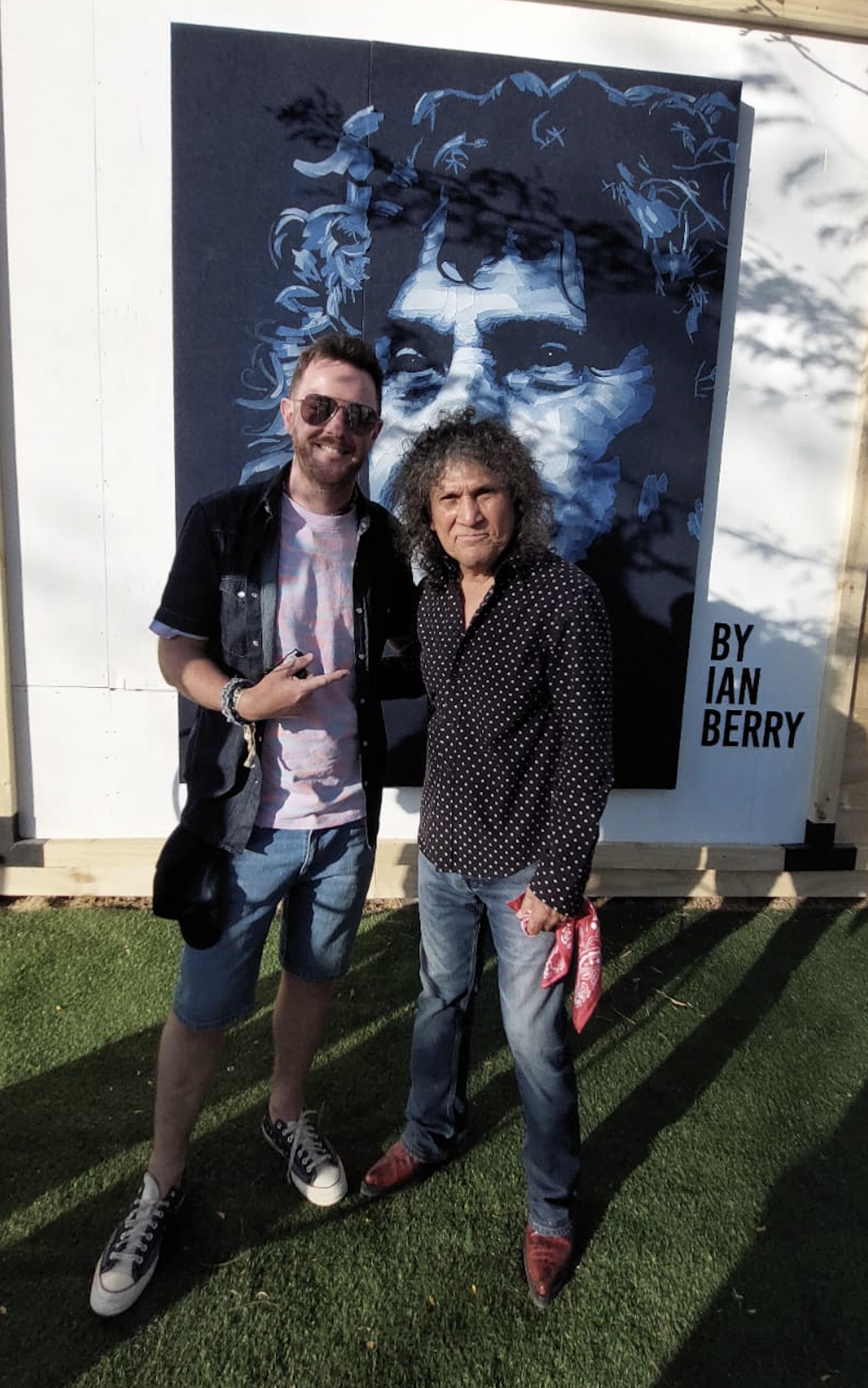
Ian Berry with Roberto Marquez
Ian Berry was honoured with meeting Roberto with and was able to talk for a long time with him about the band and his music and was keen to hear his reaction to the portrait, his wives favourite picture.
Artist Profile | ANA TIJOUX
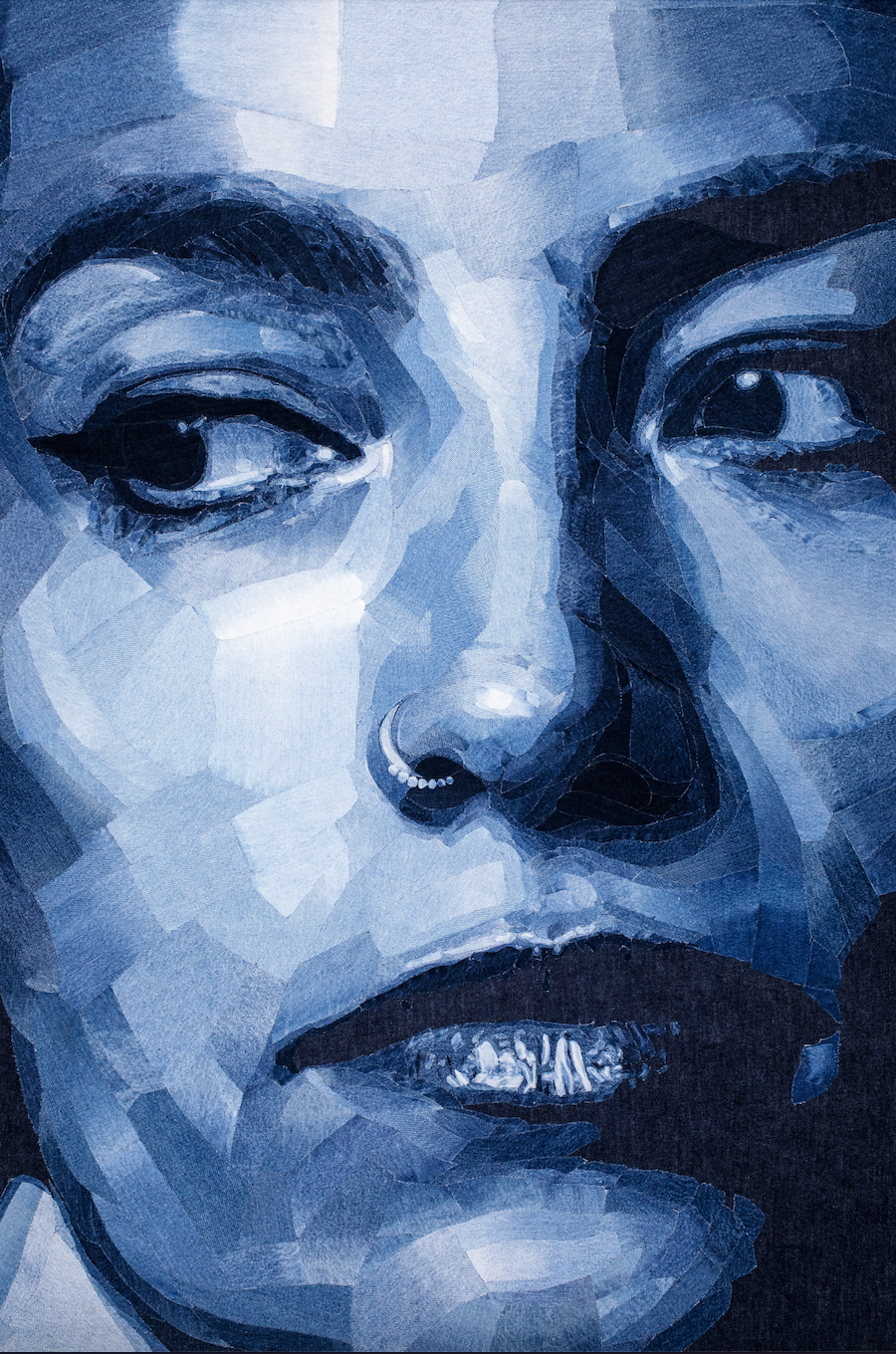
ANA TIJOUX
(1977, LILLE - FRANCE)
Anamaría Tijoux Merino, better known as Ana Tijoux or Anita Tijoux (French pronunciation: [ti'ʒu]), is a Chilean-French singer, musician, rapper, lyricist and composer. She gained recognition in Latin America as the female MC of the hip-hop group Makiza during the late 1990s, spreading her success following her second solo album, “1977”. Her music speaks to the tune of hip hop, fused.

Feminist and activist. In her lyrics, she denounces social and cultural shortcomings and positions herself in favor of women's rights and against gender violence. In 2014, the song "Antipatriarca" stood out on his album “Vengo”. He has worked in various countries in Latin America, Europe and the United States. She has been cataloged by various media as the "best and best known rapper in Spanish." She has been nominated on several occasions for the Grammy Awards. She lives in Chile and France.
She was born on June 12, 1977 in the French city of Lille, the daughter of sociologist María Emilia Tijoux and Roberto Merino Jorquera, two Chileans exiled from the military dictatorship after the coup d'etat of September 11, 1973 in that country. In 1982 her family moved to Paris for work issues, living in the neighborhoods of Belleville and Saint Maurice. 7 It would not be until 1983 when she knew Chile on a trip that she and her family made to visit her grandparents.
In 1988 she began to delve into hip hop, initially as a dancer. After the return to democracy in Chile, she returned to that country to settle there permanently in 1993.
In 1997 he began to form part of the Chilean rap band Makiza, known for spreading socially committed lyrics and praised for the dynamics of its production. The following year the band released its first album, “Vida Salvaje”, with great success. In 1999 they would launch “Aerolíneas Makiza”. An album that talks about taboo subjects such as life in exile, being a mother at an early age, etc.
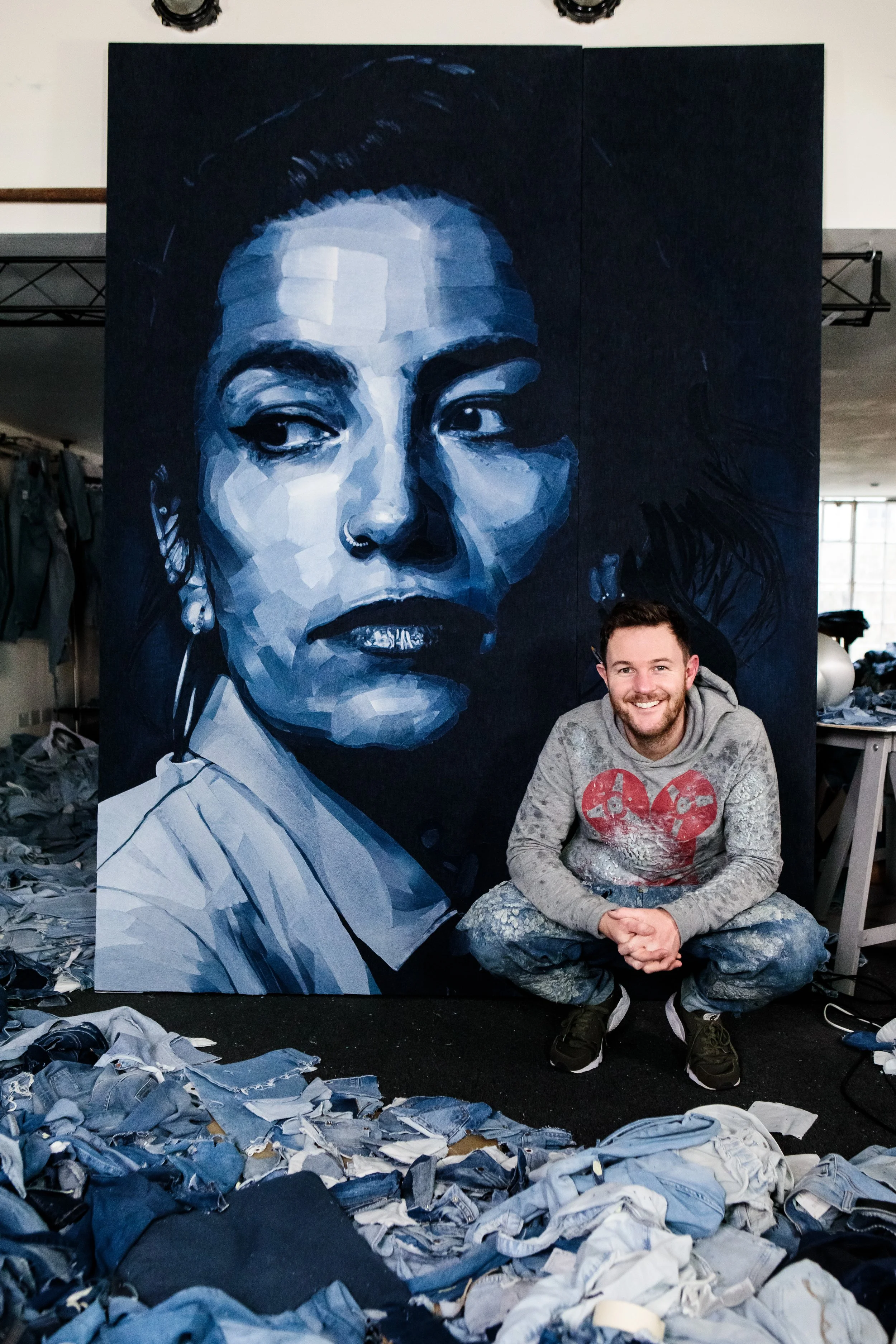
ANA TIJOUX by Ian Berry
In 2004 Makiza met again, they remastered their first work "Vida Salvaje" and in 2005 they would release heir third and last album “Casino Royale”. He would also contribute with his voice to "Nea", vocalist of the animated series Pulentos broadcast by Channel 13. In 2006 she definitively distanced herself from Makiza and began his solo career, due to personal differences between the members of the band.
Her first solo album, entitled “Kaos”, produced by Nicolás Carrasco (Foex) of the Potoco Discos label, would be released in 2007, with his first single "Despabílate!". In this album he fuses funk, soul and other black rhythms, giving himself the freedom to compose sad, happy, dynamic and melodic songs with the desire to show a whole range of emotions. In June 2009, Anita made her first tour of Mexico, performing at the "Vive Latino" Festival on the 28th of that month, and then making several presentations in the Aztec capital.
With her album “1977” (2009), Ana Tijoux showed her skills through sophisticated rhythms and lyrics, wrapped in a voice with a touch of jazz. The album, named for his year of birth, paints a picture of his childhood in France and pays homage to the Chilean hip hop that inspired him in the early '90s. That same year the leader of Radiohead, Thom Yorke, recommended that his followers listen to the artist's song "1977", which increased the popularity of Tijoux in Europe. In addition, that song set the music for a scene from the fifth chapter of the fourth season of the popular “Breaking Bad” series and in the EA Sports FIFA 11 game.
In 2010 she toured the United States, and was also nominated for a Grammy. During 2011, MTV Iggy Pop highlighted her among the 12 best MCs worldwide, occupying the first place in this ranking, highlighting her latest album 1977. With “La bala” (2011), released under the Oveja Negra label, she undertook a march that pushes the limits with a style that alters and reorganizes the references of hip hop to convey a state of mind full of strength and that stands out for a sound full of contrasts in the brilliant triad of the songs «La bala», «Shock» and "Desclasificado", going through the humor and the programming of "Las cosas por su nombre", to the soul of "Mi medio y Volver". That same year, together with MC Lagarto, they played in various gigs in schools within the framework of the student mobilization in Chile in 2011.
Both in her record work Ana Tijoux and in her public statements, Tijoux has committed herself to defending women's rights and has denounced gender violence and inequality. Also the inequality faced by artists in the world of cinema, or singers.
Considered one of the main MCs in Latin America, Ana Tijoux has been nominated for the MTV Video Music Awards Latin America as "Best New Artist" and "Best Urban Artist", and became the second Chilean artist to be nominated for the Grammy Awards. from the United States reaching four nominations, becoming the Chilean with the most nominations for these awards: in 2011, she was nominated for the Grammy Awards with “1977” in the category “Best Latin/Urban/Alternative Rock Album”, which would be repeated in 2013 for “La Bala” and in 2015 with “Vengo” in the “Best Latin/Urban/Alternative Rock Album” category. Likewise, at the Latin Grammy Awards, she has been nominated with “La Bala” for “Best Urban Music Album” (2012) and with “Sacar la voz” (2013).
In 2014, she won a Latin Grammy Award with "Universos Paralelos" together with the uruguayan artist Jorge Drexler in the "Song of the Year" category and, in 2014, she was nominated with "Vengo" in the "Best Urban Song" category. In 2015, with his album "Vengo", he won four awards at the Pulsar Chilean Music Awards: Album of the Year, Song of the Year for "Vengo", Artist of the Year and Best Urban Music Artist.
Artist Profile | JORGE GONZÁLEZ
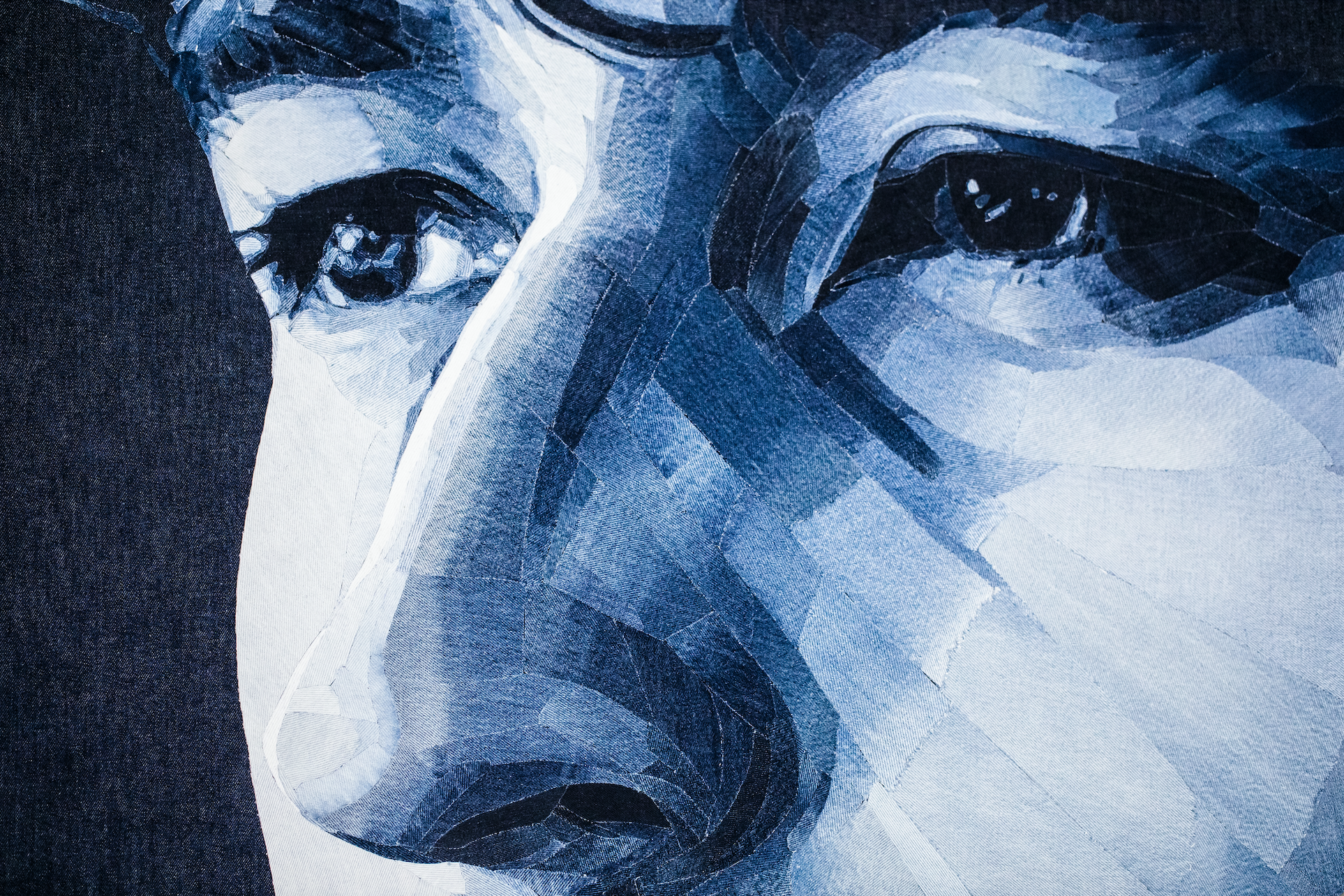
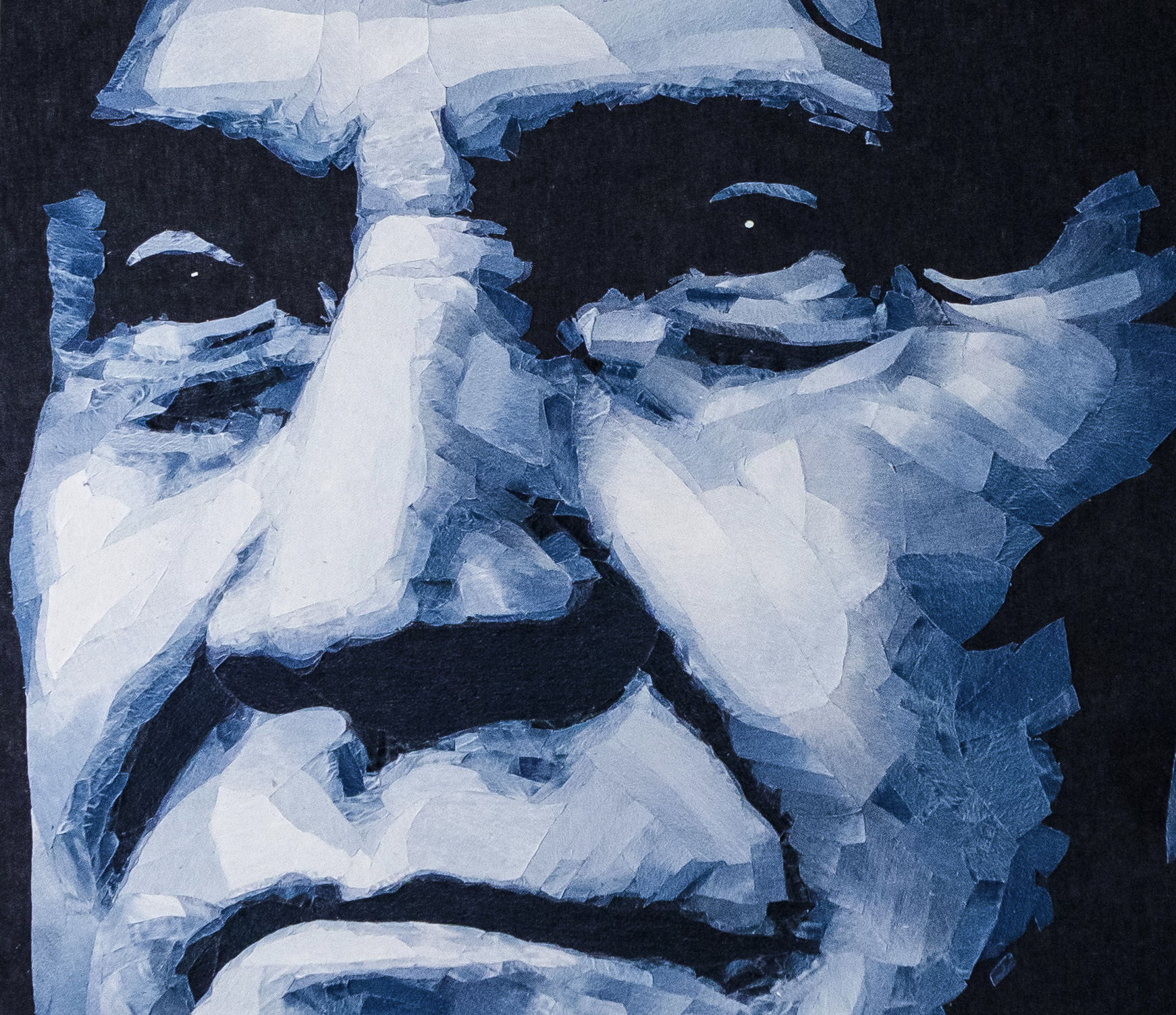
detail of JORGE GONZÁLEZ (photo Debbie Bragg)
JORGE GONZÁLEZ
(1964, SAN MIGUEL, SANTIAGO - CHILE)
The first portrait unveiled of the three made by Ian Berry to celebrate the trio of Chilean iconic artists is one of the most important and influential musicians in Chile and Latin America - Jorge Humberto González Ríos.
González is the former leader of the rock band Los Priosioneros, a popular group from the 1980s, which he joined with Miguel Tapia (drums) and Claudio Narea (guitar). The group, known for its songs of a political nature and in opposition to the military leadership of Augusto Pinochet (1973-1990), released six studio albums.
His first LP, "La voz de los 80" (1984) is one of his most important albums of his entire career. From there come songs like "La voz de los ‘80” (The voice of the 80s), "Latinoamérica es un pueblo al sur de Estados Unidos” (Latin America is a town in the south of the United States), “Sexo” (Sex), "Paramar", “¿Quién mató a Marilyn?” (Who killed Marilyn), among others.

Later, they released other albums: "Pateando piedras" (1986), "La cultura de la basura"(1987) and "Corazones” (1990). Claudio Narea left the group when Los Prisioneros released "Corazones", considered in 2008 one of the most important albums of Chilean music, with strong electronic influences and romantic lyrics, according the chilean edition of Rolling Stone Magazine.
After the first dissolution of Los Prisioneros, in 1991, González unfolded his varied musical interests in a solo career on equally diverse stations, including the kind and spiritual pop of his solo debut in “Jorge González” (1993), the experimentation of “El futuro se fue” (1994) and a position of renewed acidity in “Mi destino. Confesiones de una estrella de rock” (1999).
His interest in techno sound and several years of residence in New York (where he studied Sound) during the nineties, brought him closer to outstanding exponents of electronic music, the result of which collaborations with the prestigious German musician Uwe Schmidt (Señor Coconut), the Chilean-German group Sieg Über Die Sonne and the Chilean Vicente Sanfuentes (Original Hamster), as well as the duo Gonzalo Martínez, formed together with Martín Schopf (Dandy Jack)
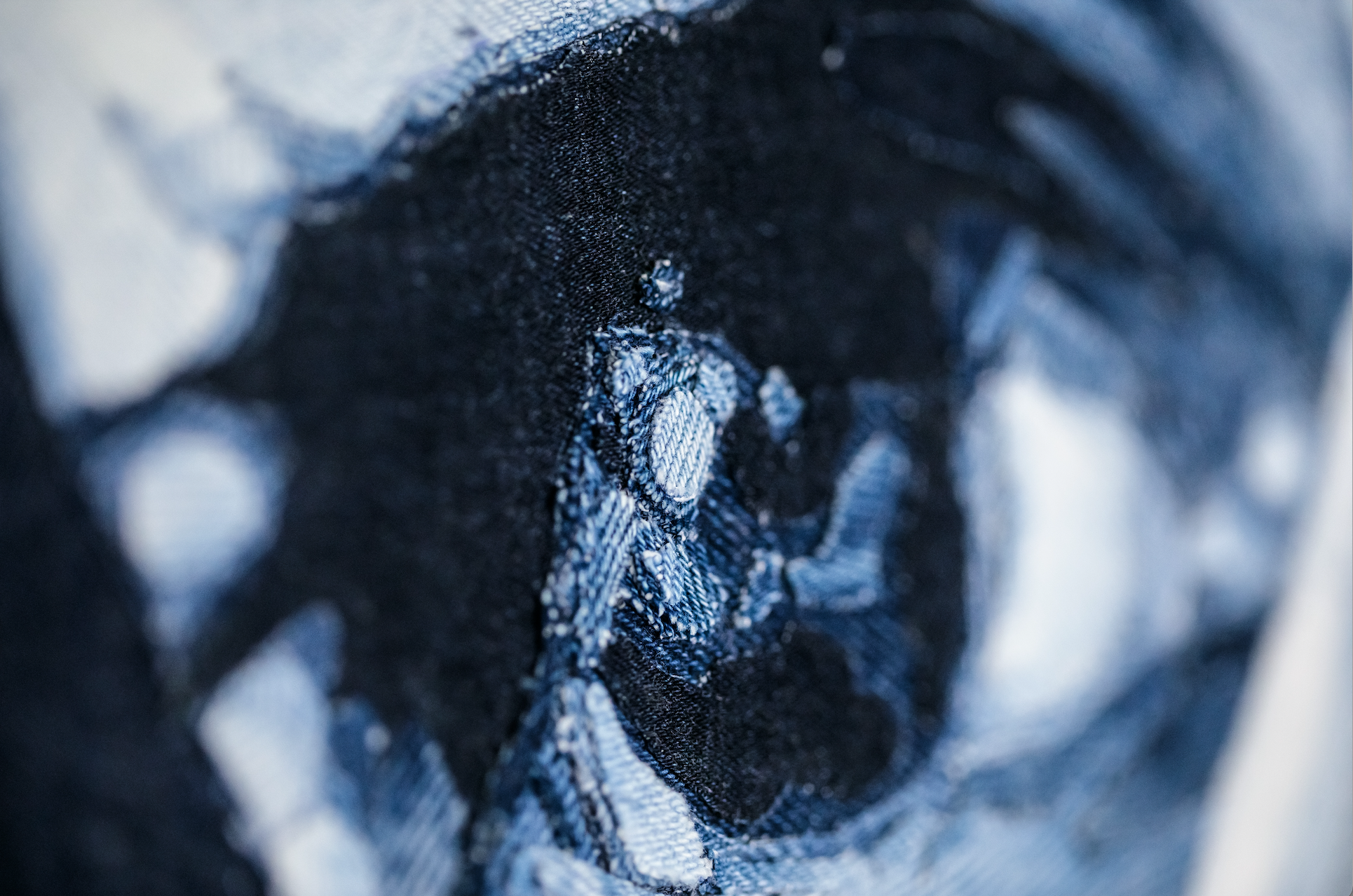
photo by Debbie Bragg
The troubled reunion of Los Prisioneros between 2001 and 2006 left González convinced of the virtues of solo work, which he has continued to carry out through projects such as Los Updates.
In February 2015, Jorge González suffered a cerebrovascular accident that left him with motor sequelae. The musician lives in San Miguel district of Santiago, where he resides with his brother and rarely gives interviews, although he always gives an opinion on political and social events in the country.

photo by Debbie Bragg
Ian Berry had the great pleasure of visiting Jorge at his home and talking bout the portrait, his life, music and even football. Ian Berry was humbled to meet one of Chile’s great icon’s and cherishes the beer drank together.
BLUE JEANS | Museum show in Osnabruek, Germany
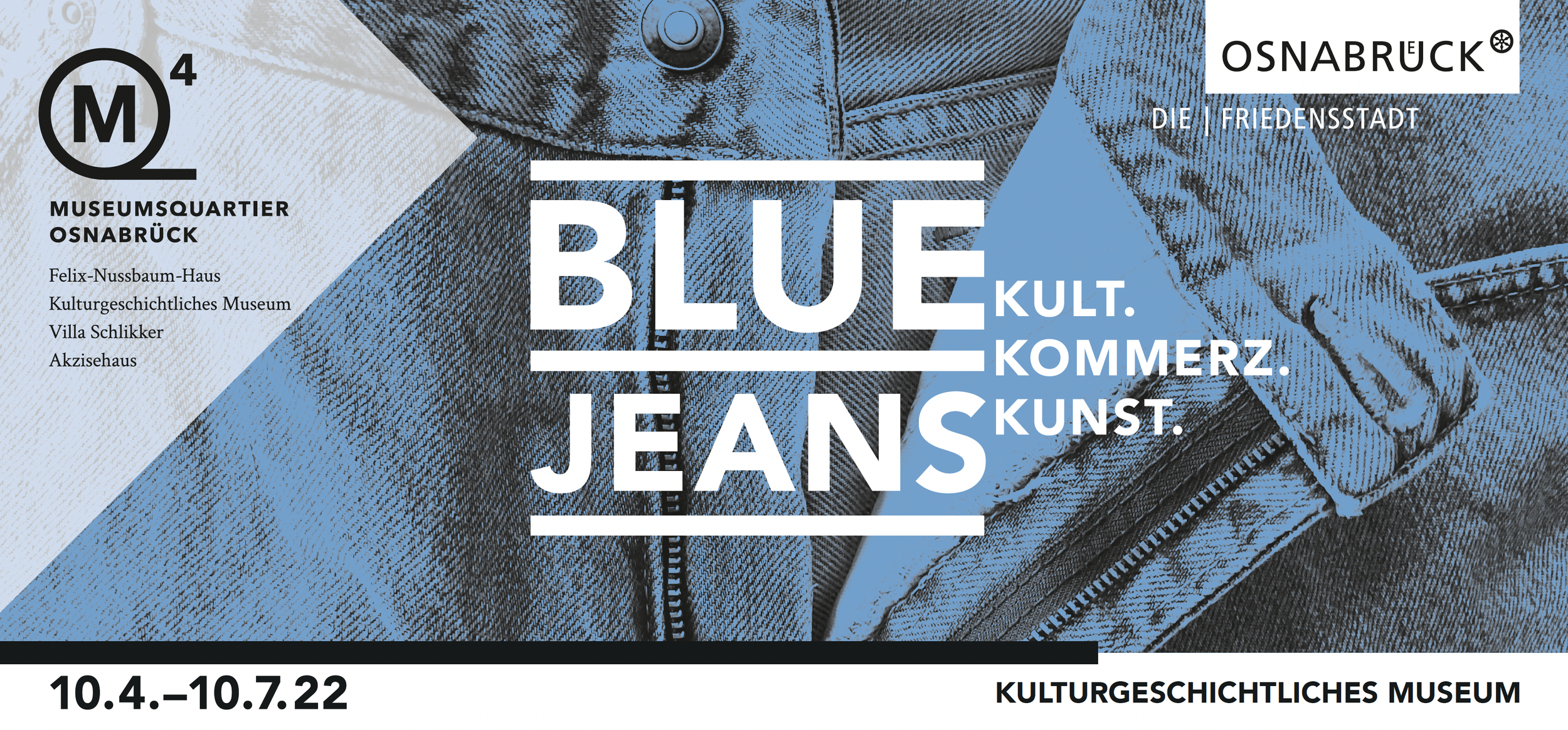
EXHIBITION IN THE CULTURAL HISTORY MUSEUM
APRIL 10 – JULY 10, 2022
Admission to the exhibition is free on the opening day.
Ian Berry will take part in a new exhibition with The Museumsquartier Osnabrück in Germany where he will show two installations, his Secret Garden made from many parts of denim and jeans and the project Denim Legends that continues to ask the question, who is your denim legend?
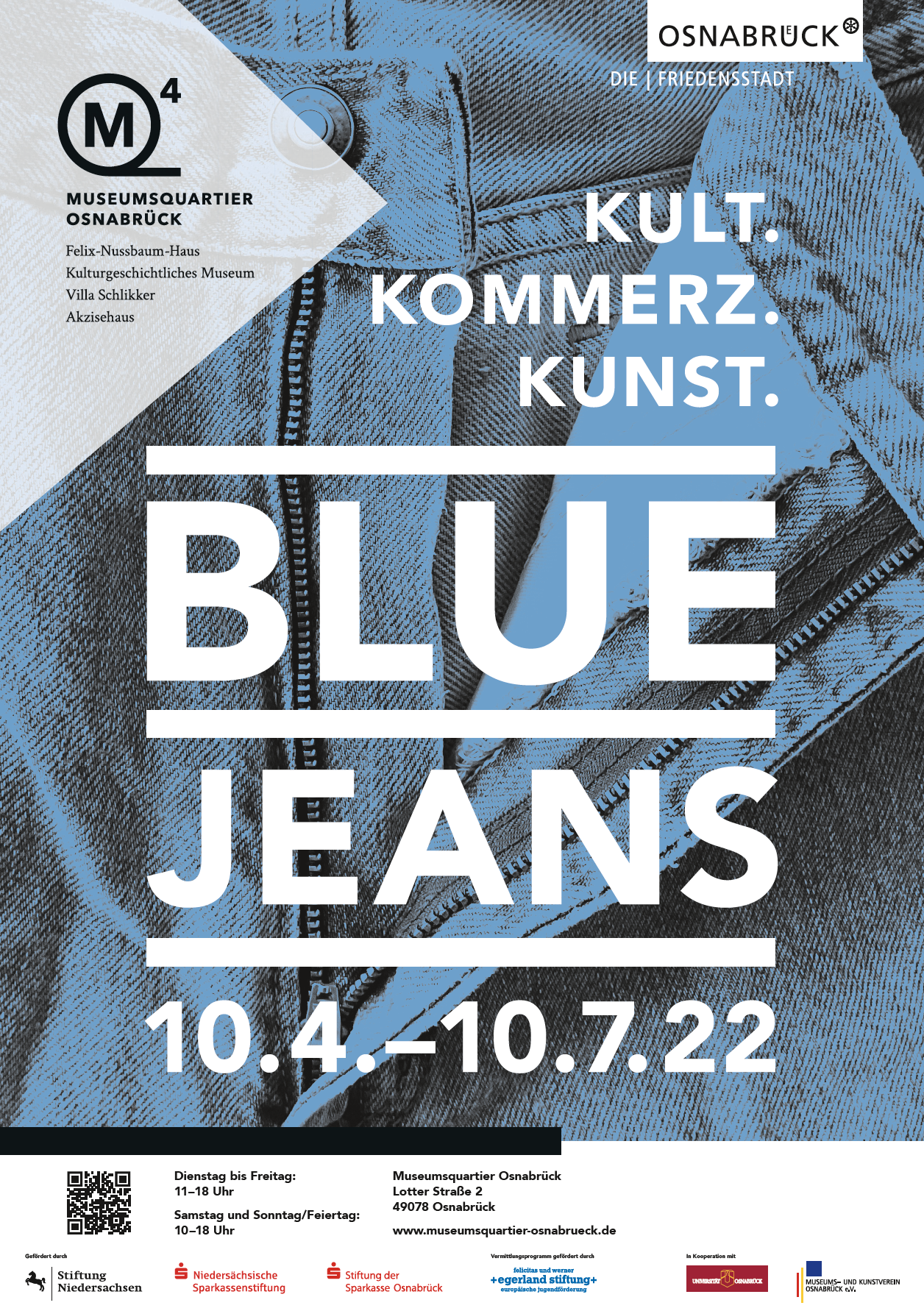
Blue jeans have stood for a lifestyle of freedom and unconventional nonchalance for more than 150 years. The cliché of the unbound cowboy lives on just as much as the legend of the revolutionary trousers of the 1968s. But this piece of clothing is now associated with more than cult and nostalgia. Social stories of divided Germany, the 1968 protest movement, women's emancipation, gender stereotypes or the gay movement can be told on it. Well-known artists have integrated blue jeans into their art, taken up their symbolic power, exaggerated it or critically questioned it. Others have provided designs for the jeans advertisement. Fashion history, advertising strategies and artistic positions can thus be illustrated using the development of blue jeans.
The Museumsquartier Osnabrück is dedicating a multifaceted exhibition to this cultural-historical phenomenon, in which works by famous artists such as Joseph Beuys, VALIE EXPORT, Wang Bing, Ian Berry and others show blue jeans in art and deal with topics such as identity, cult objects or production. In combination with photographs, film and music, with newspaper articles and magazines, with original jeans and design pieces, the exhibition delves into the legends and stories surrounding blue jeans, revealing their complexity and reflecting on the role they play in creating identity.

Ian Berry will show a new installation of Secret Garden in Blue Jeans at The Museumsquartier Osnabrück
With the rise of blue jeans from worker pants to ubiquitous clothing, the downside of a mass-produced item also comes into play: mass production and its consequences for people and the environment. The production of blue jeans is considered one of the most harmful in the textile industry. For several years, environmentally conscious producers have been looking for sustainable alternatives, both in the use of raw materials and in the after-treatment of the trousers. In the winter semester 2021/2022, students at the University of Osnabrück researched the downsides, sustainability seals, innovations and possibilities for reuse. They summarize their results for the exhibition section "Production and Sustainability" and make the topic accessible with exhibits and participatory elements.
In the extensive supporting program for the exhibition, you can design your own jeans creations in upcycling workshops or find alternatives to the throwaway mentality in jeans exchange markets.
Questions of shaping the future, resource consumption and sustainability, individuality and conformity can be discussed in the diverse educational program.
Here Ninke Bloemberg (Fashion Curator, Centraal Museum, Utrecht) uses the example of the Old Masters to explain why Levi Strauss did not invent blue jeans. Ruedi Karrer, director of the world's only brand-independent jeans museum in Zurich, uses a few showpieces from his jeans collection to illustrate what makes a true blue jeans fan, why blue jeans should not be washed and how counterfeits can be recognized. Carl Tillessen (trend analyst, author, designer and lecturer) talks about blue jeans as a perennial favorite in fashion and Thomas Rau (architect & visionary) about his groundbreaking concepts for sustainability and circular economy. Uwe Gansfort (Managing Director of C&A "Factory for Innovation in Textiles", in short: FIT) and Prof. Dr.-Ing. habil. Maike Rabe (Head of the Research Institute for Textiles and Clothing, Niederrhein University of Applied Sciences) discuss a pilot project that would like to bring blue jeans production back to the old textile location in Mönchengladbach after decades.
The exhibition “BLUE JEANS – Cult. commercial Art.” is a cooperation with the Department of Textile Design of the Department of Cultural and Social Sciences at the University of Osnabrück and the Museums- und Kunstverein Osnabrück e. V
The exhibition is sponsored by the Lower Saxony Foundation, the Niedersächsische Sparkassenstiftung and the Stiftung der Sparkasse Osnabrück.
The educational program is supported by the Felicitas and Werner Egerland Foundation.
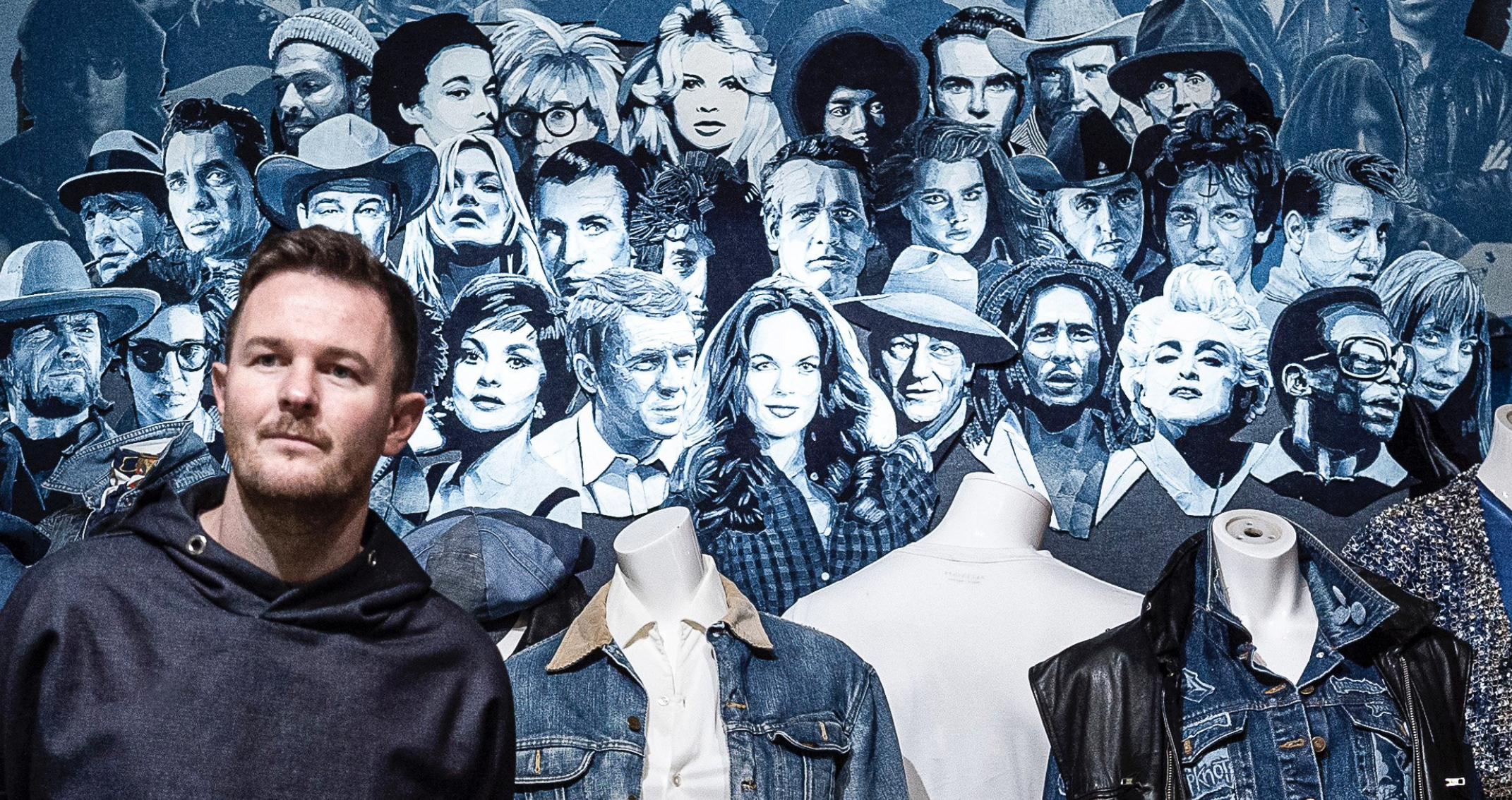
Ian Berry will also show the installation ‘Denim Legends’ as part of the BLUE Jeans exhibition.
Participating artists are Ian Berry, Joseph Beuys, Thorsten Brinkmann, Hans Eijkelboom, Elmgreen & Dragset, VALIE EXPORT, Axel Lieber, Meister der Blue Jeans, Ulrike Rosenbach, Karlheinz Weinberger and Wang Bing.
APPENDIX
DETAILED EXHIBITION DESCRIPTION
The exhibition begins with a historical painting by an artist whose name is still unknown. The genre painter was active in northern Italy from around 1675 to 1700. A constant in his work is the depiction of an indigo blue fabric in his characters' clothing, which is very reminiscent of modern blue jeans and gave the unknown artist his makeshift name "Master of Blue Jeans". It is surprising to find denim fabric as early as the 17th century, since it is commonly associated with Levi Strauss, who patented jeans with rivet-reinforced seams in the 19th century. He quickly realized that the Californian gold diggers needed durable trousers and brought them to the working man. The sculpture “American Sculpture (Jeans)” by the sculptor Axel Lieber refers to blue jeans as one of the main symbols of the “American way of life”.
In the course of cultural and economic Americanization, blue jeans also became popular in Europe after the war. Following cinematic role models such as James Dean, Marlon Brando and Elvis Presley, in the 1950s they acquired a dubious reputation as part of the outfit of so-called 'hooligans': young males from the working-class milieu who wore jeans with black leather jackets and white T-shirts hair styled with lots of pomade in 'lard curls' or 'ducktails'. By the end of the 1950s, their provocative behavior caused a stir in post-war society, which was striving for stability and prosperity. The Swiss Karlheinz Weinberger photographed the “Jeans” series between 1955 and 1964, in which he documented the enthusiasm of the so-called hooligans for James Dean and Elvis Presley, for jeans and rock 'n' roll.
From the mid-1960s, blue jeans became a symbol of social protest, revolutionism and alternative lifestyles of a young generation who rebelled in their own social environment against what they experienced as a restrictive social climate and an encrusted bourgeois value system.
Artists of the time used this symbolic power: Joseph Beuys, in addition to his waistcoat and hat, made jeans his artistic uniform and titled a poster showing him in this outfit “La Rivoluzione siamo Noi” (“We are the revolution”). In their performances and self-staging, feminist artists of the 1960s and 70s consciously dressed themselves in materials with masculine connotations, such as jeans and leather jackets. In 1969, for example, the Austrian artist VALIE EXPORT radically took control of the male gaze into her own hands with her performance “Action Pants: Genital Panic”: With jeans, a large triangle had been cut out of the crotch and the shame was displayed naked, urged VALIE EXPORT through the narrow rows of a cinema. In her work “Art Is a Criminal Action”, Ulrike Rosenbach takes possession of male forms of domination, which are reflected in posture and clothing.
During the Cold War, blue jeans became a political issue. As an export product of imperialism, it was a thorn in the side of the GDR government and was considered a threat to the system. Accordingly, wearing jeans became a statement: "Jeans are an attitude and not trousers," Edgar Wibeau, the protagonist in Ulrich Plenzdorf's drama "The New Sorrows of Young W." 1972 announced and spoke from the heart of the young people of the GDR. In the mid-1970s - the attitude of the SED towards jeans had meanwhile become more moderate - the textile companies in the GDR started their own jeans production. "Wisent", "Boxer" or "Shanty" were the names of the brands that came onto the market from 1978.
However, they could not replace the desire for “real” jeans, which one had from western relatives or bought on the black market. Around 1987, every young person in the GDR had an average of two pairs of jeans in their closet, which exceeded the statistical value in Western Europe.
At the beginning of the 1970s, queer people, driven by protest movements such as the Gay Liberation Movement, began to increasingly question their social status and the ideas and images associated with it. The striving for change during this time was not only associated with political demands, but also expressed itself for many in the desire to redefine their own appearance and, above all, to be self-determined. In this context, the group of so-called “clones” stood out in particular: homosexual and bisexual men looking for inspiration for a new self-image from concepts of masculinity that are deeply rooted in American culture, such as those of cowboys, lumberjacks or construction workers and, in addition to short haircuts and mustaches, primarily adapted blue jeans as a male garment.
In this context, the Scandinavian artist duo Elmgreen & Dragset question patterns of perception and behavior with the sculpture "Powerless Structures, Fig. 19" by initiating indications of a situation that may have taken place and thus setting individual thought chains in motion in the viewer.
The hip-hop scene in the 1990s created its identity with the baggy pants: particularly wide pants, the waistband of which was usually worn well below the hips. These denim pants are said to date back to a practice in US prisons where new prisoners were first stripped of their belts to prevent strangulation or beatings. Outside of prison, this style of carry made its way into the culture of gangsta rap. Later, the fashion became popular in the skateboarding and snowboarding scene.
Blue jeans also make statements in politics: Joschka Fischer broke taboos when he was sworn in as Environment Minister in jeans and white sneakers on December 12, 1985. Recently, in 2016, the Süddeutsche Zeitung accused the former Daimler boss Dieter Zetsche, who appeared in jeans at a party conference of the Greens in 2016, of being a sheep in wolf's clothing. He should come in a suit and tie, so that you know who you are dealing with.
In “Denim Legends”, the artist Ian Berry portrays people who helped pave the way for blue jeans to become a universally worn item of clothing today. He creates his fascinating works of art solely from denim. The artist cuts up blue jeans pants, jackets and shirts, layers them and arranges the different shades of blue into paintings and installations. His "Secret Garden", which recurs at various exhibition locations, is created from floral forms that are made entirely of recycled denim. This creates spaces teeming with indigo blue plants of different shades.
With photographs by the conceptual artist Hans Eijkelboom, the exhibition looks at people in the 21st century. For 25 years, Hans Eijkelboom has roamed the shopping streets of countless cities around the world, capturing in photographs the diversity of clothing that is such a defining feature of global capitalism—that plethora of visual (“external”) differences that, from an artist’s perspective, , interested in the recognition of patterns, i.e. repetitions, becomes a document of fascinating sameness.
The artist Thorsten Brinkmann seems to use blue jeans in the function of a 'uniform' of interchangeability. All that can be seen of the life-size figure “Brinkmann” are the blue jeans-clad legs and the Adidas sneakers. The torso is hidden under a cardboard box. In all of his self-portraits, Brinkmann is always masked and disguised beyond recognition. His photographs can be understood as a corruption of classic portrait painting, which also sabotage icons. He shows himself in the work with jeans and trainers in order not to be really visible.
Ever since blue jeans became a mass-produced article in the 1980s, their production has been considered one of the most harmful in the textile industry - because of the large amount of water that is used in the production of the raw material cotton, because of the many chemicals that are used during production are used and then end up in the environment, and because of the often inhumane working conditions in the low-wage countries from which most blue jeans come today. Above all, the treatment of the fabric, which is supposed to give the blue jeans a used look, is the subject of criticism.
Not only the students of the University of Osnabrück look at the dark sides as well as sustainability seals, innovations and possibilities of reuse in the exhibition. Wang Bing, one of the most influential contemporary Chinese filmmakers, documents in the film "15 Hours" the length of a day shift of seamstresses at the Huzhou Garment Factory in a single film shot: 15 hours.
Before visiting, please inform yourself about the currently applicable hygiene rules via our website, by telephone on 0541/323-2237 or by e-mail Willkommen-mq4@osnabrueck.de.
German
BLUE JEANS
AUSSTELLUNG IM KULTURGESCHICHTLICHEN MUSEUM
10. APRIL – 10. JULI 2022
Der Eintritt zur Ausstellung ist am Eröffnungstag frei.
Bitte informieren Sie sich vor dem Besuch über unsere Internetseite, telefonisch unter 0541/323-2237 oder per E-Mail willkommen-mq4@osnabrueck.de über die aktuell geltenden Hygieneregeln.
Blue Jeans stehen seit mehr als 150 Jahren für ein Lebensgefühl von Freiheit und unkonventioneller Lässigkeit. Das Klischee vom ungebundenen Cowboy lebt noch genauso nach wie die Legende von der Revoluzzerhose der 68’er. Aber mit diesem Kleidungsstück verbindet sich inzwischen mehr als Kult und Nostalgie. An ihm lassen sich gesellschaftliche Geschichten des zweigeteilten Deutschlands, der 68er-Protestbewegung, der Frauenemanzipation, der Geschlechterstereotypen oder der Schwulenbewegung erzählen. Namhafte Künstler:innen haben die Blue Jeans in ihre Kunst integriert, haben deren Symbolkraft aufgegriffen, überspitzt dargestellt oder kritisch hinterfragt. Andere haben Entwürfe für die Jeanswerbung geliefert. Modegeschichte, Werbestrategien und Kunstpositionen lassen sich somit am Werdegang der Blue Jeans veranschaulichen.
Das Museumsquartier Osnabrück widmet diesem kulturgeschichtlichen Phänomen eine facettenreiche Ausstellung, in der Werke berühmter Künstler:innen wie Joseph Beuys, VALIE EXPORT, Wang Bing, Ian Berry u. w. die Blue Jeans in der Kunst zeigen und Themen wie Identität, Kultobjekte oder Produktion behandeln. In Kombination mit Fotografien, Film und Musik, mit Zeitungsartikeln und Zeitschriften, mit Jeans-Originalen und Designstücken taucht die Ausstellung in die Legenden und Geschichten rund um die Blue Jeans ein, lässt ihre Vielschichtigkeit erkennen sowie ihre identitätsstiftende Rolle reflektieren.
Mit der Karriere der Blue Jeans von der Arbeiterhose zum allgegenwärtigen Kleidungsstück kommen auch die Schattenseiten eines Massenartikels zum Tragen: die Massenproduktion und ihre Folgen für Mensch und Umwelt. Die Produktion der Blue Jeans gilt als eine der schädlichsten in der Textilindustrie. Seit einigen Jahren suchen umweltbewusste Produzenten nach nachhaltigen Alternativen, sowohl beim Einsatz von Rohstoffen als auch bei der Nachbehandlung der Hosen. Studierende der Universität Osnabrück haben im Wintersemester 2021/2022 die Schattenseiten, Nachhaltigkeitssiegel, Innovationen und Möglichkeiten der Wiederverwendung recherchiert. Ihre Ergebnisse fassen sie für den Ausstellungsteil „Produktion und Nachhaltigkeit“ zusammen und machen das Thema mit Exponaten und partizipativen Elementen zugänglich.
Im umfangreichen Rahmenprogramm zur Ausstellung können in Upcycling-Workshops eigene Jeanskreationen entworfen oder in Jeans-Tausch-Börsen Alternativen zur Wegwerfmentalität wahrgenommen werden.
Fragen der Zukunftsgestaltung zu Ressourcenverbrauch und Nachhaltigkeit, zu Individualität und Konformität können in dem vielfältigen Vermittlungsprogramm diskutiert werden.
Hierin erklärt Ninke Bloemberg (Fashion Curator, Centraal Museum, Utrecht) am Beispiel Alter Meister, warum Levi Strauss die Blue Jeans nicht erfunden hat. Ruedi Karrer, Direktor des weltweit einzigen, markenunabhängigen Jeansmuseums in Zürich illustriert mit Hilfe einiger Prunkstücke seiner Jeans-Kollektion, was einen echten Blue Jeans-Fan ausmacht, warum Blue Jeans nicht gewaschen werden sollten und woran Plagiate zu erkennen sind. Carl Tillessen (Trendanalyst, Autor, Designer und Dozent) spricht über die Blue Jeans als Dauerbrenner in der Mode und Thomas Rau (Architekt & Visionär) über seine bahnbrechenden Konzepte für Nachhaltigkeit und zirkulaire Ökonomie. Uwe Gansfort (Geschäftsführer der C&A „Factory for Innovation in Textiles“, kurz: FIT) und Prof. Dr.-Ing. habil. Maike Rabe (Leiterin des Forschungsinstituts für Textil und Bekleidung, Hochschule Niederrhein) diskutieren über ein Pilot-Projekt, dass die Blue Jeans-Produktion nach Jahrzehnten wieder an den alten Textilstandort Mönchengladbach zurückholen möchte.
Die Ausstellung „BLUE JEANS – Kult. Kommerz. Kunst.“ ist eine Kooperation mit dem Fachgebiet Textiles Gestalten des Fachbereichs Kultur- und Sozialwissenschaften der Universität Osnabrück und dem Museums- und Kunstverein Osnabrück e. V.
Die Ausstellung wird gefördert von der Stiftung Niedersachsen, der Niedersächsischen Sparkassenstiftung und der Stiftung der Sparkasse Osnabrück.
Das Vermittlungsprogramm wird unterstützt durch die Felicitas und Werner Egerland Stiftung.
Beteiligte Künstler:innen sind Ian Berry, Joseph Beuys, Thorsten Brinkmann, Hans Eijkelboom, Elmgreen & Dragset, VALIE EXPORT, Axel Lieber, Meister der Blue Jeans, Ulrike Rosenbach, Karlheinz Weinberger und Wang Bing.
APPENDIX
DETAILLIERTE AUSSTELLUNGSBESCHREIBUNG
Die Ausstellung beginnt mit einem historischen Gemälde eines bis heute namentlich unbekannten Künstlers. Der Genre-Maler war von ungefähr 1675 bis 1700 in Norditalien tätig. Eine Konstante in seinem Werk ist die Abbildung eines indigoblauen Gewebes in der Kleidung seiner Figuren, welches sehr an die modernen Blue Jeans erinnert und dem unbekannten Künstler seinen Behelfsnamen „Meister der Blue Jeans“ gab. Es überrascht, den Denim-Stoff schon im 17. Jahrhundert vorzufinden, wird er doch gemeinhin mit Levi Strauss zusammengebracht, der im 19. Jahrhundert die Jeans-Hose mit den durch Nieten verstärkten Nähten patentieren ließ. Dieser hatte schnell erkannt, dass die kalifornischen Goldgräber strapazierfähige Hosen benötigten, und brachte sie an den arbeitenden Mann. Auf die Blue Jeans als eines der tragenden Symbole für den „American Way of Life“ nimmt die Skulptur „American Sculpture (Jeans)“ des Bildhauers Axel Lieber Bezug.
Im Zuge der kulturellen und ökonomischen Amerikanisierung wurden die Blue Jeans nach dem Krieg auch in Europa populär. Nach filmischen Vorbildern wie James Dean, Marlon Brando oder Elvis Presley bekam sie in den 1950er Jahren einen zweifelhaften Ruf als Teil des Outfits sogenannter ‚Halbstarker’: männlicher Jugendlicher aus dem Arbeitermilieu, die die Jeans zu schwarzen Lederjacken und weißen T-Shirts trugen, dazu die Haare mit viel Pomade zu ‚Schmalzlocken’ oder ‚Entenschwänzen’ frisiert. Bis Ende der 50er sorgten sie mit provozierendem Verhalten für viel Aufregung in der nach Stabilität und Wohlstand strebenden Nachkriegsgesellschaft. Der Schweizer Karlheinz Weinberger fotografierte zwischen 1955 und 1964 die Serie „Jeans“, in welcher er die Begeisterung der sogenannten Halbstarken für James Dean und Elvis Presley, für Jeans und Rock 'n' Roll dokumentierte.
Ab Mitte der 1960er Jahren wurde die Blue Jeans zum Symbol für gesellschaftlichen Protest, Revoluzzertum und alternative Lebensstile einer jugendlichen Generation, die im eigenen sozialen Umfeld gegen ein als restriktiv erfahrenes gesellschaftliches Klima und ein verkrustetes bürgerliches Wertesystem rebellierte.
Künstler:innen der Zeit nutzten diese Symbolkraft: Joseph Beuys machte neben Weste und Hut die Jeans zu seiner Künstleruniform und betitelte ein Plakat, das ihn in dieser Montur zeigt, mit „La Rivoluzione siamo Noi“ („Die Revolution sind wir“). Feministische Künstlerinnen der 1960er und 70er Jahre bekleiden sich in ihren Performances und Selbstinszenierungen bewusst mit männlich konnotierten Materialien wie Jeans und Lederjacke. So nimmt die österreichische Künstlerin VALIE EXPORT 1969 auf radikale Weise mit ihrer Performance „Aktionshose: Genitalpanik“ die Steuerung des männlichen Blickes selbst in die Hand: Mit einer Jeanshose, aus deren Schritt ein großes Dreieck herausgeschnitten war und die Scham nackt zur Schau stellte, drängte VALIE EXPORT sich durch die engen Reihen eines Kinos. Ulrike Rosenbach bemächtigt sich in ihrer Arbeit „Art Is a Criminal Action“ männlicher Herrschaftsformen, die sich in Körperhaltung und Kleidung spiegeln.
Im Kalten Krieg wurde die Blue Jeans zum Politikum. So war sie der DDR-Regierung als Exportprodukt des Imperialismus ein Dorn im Auge und galt als systemgefährdend. Entsprechend wurde das Jeanstragen zum Statement: „Jeans sind eine Einstellung und keine Hose”, ließ Edgar Wibeau, der Protagonist in Ulrich Plenzdorfs Drama „Die neuen Leiden des jungen W.” 1972 verlauten und sprach den Jugendlichen der DDR aus dem Herzen. Mitte der 1970er-Jahre – die Haltung der SED gegenüber den Jeans war inzwischen moderater geworden – setzten die Textilbetriebe der DDR eine eigene Jeansproduktion in Gang. "Wisent", "Boxer" oder "Shanty" hießen die Marken, die ab 1978 auf den Markt kamen.
Den Wunsch nach der „echten“ Jeans konnten sie allerdings nicht ersetzen, die man sich von Westverwandten schicken ließ oder auf dem Schwarzmarkt kaufte. Um 1987 hatte jeder Jugendliche in der DDR durchschnittlich zwei Jeans im Schrank, was den statistischen Wert des Westen Europas übertraf.
Anfang der 70er Jahre begannen auch queere Menschen angetrieben von Protestbewegungen wie dem Gay Liberation Movement ihren sozialen Status und damit verknüpfte Vorstellungen und Bilder immer stärker zu hinterfragen. Das Streben nach Wandel war in dieser Zeit jedoch nicht nur mit politischen Forderungen verbunden, sondern äußerte sich für viele darüber hinaus in dem Wunsch, das eigene Erscheinungsbild neu und vor allem selbstbestimmt zu definieren. In diesem Kontext zeichnete sich besonders die Gruppe der sogenannten „Klone“ ab: Homo- und bisexuelle Männer, die bei tief in der US-amerikanischen Kultur verwurzelten Begriffen von Männlichkeit, wie denen des Cowboys, Holzfällers oder des Bauarbeiters nach Inspiration für ein neues Selbstbild suchten und neben Kurzhaarschnitt und Moustache in erster Linie die Blue Jeans als männlich gelesenes Kleidungsstück adaptierten.
Das skandinavische Künstlerduo Elmgreen & Dragset hinterfragt in diesem Kontext mit der Skulptur „Powerless Structures, Fig. 19“ Muster der Wahrnehmung und des Verhaltens, indem sie Indizien einer möglicherweise stattgefundenen Situation initiieren und somit individuelle Gedankenketten bei den Betrachter:innen in Gang setzen.
Die Hip-Hop-Szene in den 1990ern schuf ihr Identitätsmerkmal mit den Baggy Pants: besonders weiten Hosen, deren Bund meist weit unterhalb der Hüfte getragen wurde. Diese Jeanshosen sollen auf eine Praxis aus US-Gefängnissen zurückgehen, bei der neuen Gefangenen als erstes der Gürtel abgenommen wurde, um Strangulationen oder Schlägereien zu verhindern. Außerhalb der Gefängnisse zog diese Tragart in die Kultur des Gangsta-Rap ein. Später wurde die Mode in der Skateboarding- und Snowboard-Szene populär.
Auch in der Politik werden durch die Blue Jeans Statements gesetzt: Joschka Fischer brach Tabus, als er in Jeans und weißen Turnschuhen am 12.12.1985 seine Vereidigung zum Umweltminister antrat. Jüngst, 2016, warf die Süddeutsche Zeitung dem ehemaligen Daimler-Chef Dieter Zetsche, der 2016 auf einem Parteitag der Grünen in Jeans auftrat, vor, ein Schaf im Wolfspelz zu sein. Er solle gefälligst in Schlips und Anzug kommen, damit man wisse, mit wem man es zu tun habe.
Personen, die den Weg der Blue Jeans als ein heute universal getragenes Kleidungsstück mitbereitet haben, porträtiert der Künstler Ian Berry in „Denim Legends“. Seine faszinierenden Kunstwerke erschafft er einzig und allein aus dem Material Denim. Der Künstler zerschneidet Blue Jeans-Hosen, -Jacken und -Hemden, schichtet sie und arrangiert die unterschiedlichen Blauschattierungen zu Gemälden und Installationen. Sein an verschiedenen Ausstellungsorten immer wiederkehrender "Secret Garden" entsteht aus floralen Formen, die vollständig aus recyceltem Jeansstoff gefertigt sind. So entstehen Räume, in denen es von indigoblauen Pflanzen in verschiedenen Farbtönen wimmelt.
Mit Fotografien des Konzeptkünstlers Hans Eijkelboom blickt die Ausstellung auf die Menschen des 21. Jahrhunderts. Seit 25 Jahren durchstreift Hans Eijkelboom die Einkaufsmeilen unzähliger Städte auf der ganzen Welt, um die Vielfalt an Bekleidungen fotografisch festzuhalten, die ein so entscheidendes Merkmal des globalen Kapitalismus ist – jene Fülle an visuellen („äußerlichen“) Unterschieden, die aus der Perspektive eines Künstlers, der an der Erkennung von Mustern, also Wiederholungen, interessiert ist, zu einem Dokument faszinierender Gleichheit wird.
In der Funktion einer ‚Uniform‘ der Austauschbarkeit scheint der Künstler Thorsten Brinkmann die Blue Jeans zu verwenden. Von der lebensgroßen Figur „Brinkmann“ sind nur die in Blue Jeans gekleideten Beine und die Adidas-Turnschuhe zu sehen. Der Oberkörper ist unter einem Pappkarton versteckt. Auf all seinen Selbstportraits ist Brinkmann stets bis zur Unkenntlichkeit maskiert und verkleidet. Seine Fotografien kann man als Verballhornung klassischer Portraitmalerei begreifen, die auch Ikonen sabotieren. Mit Jeans und Turnschuhen zeigt er sich im Werk, um letztlich nicht wirklich sichtbar zu sein.
Seitdem die Blue Jeans in den 1980er Jahren zum Massenartikel geworden ist, gilt ihre Produktion als eine der schädlichsten in der Textilindustrie – wegen der großen Menge Wasser, die es bei der Herstellung des Rohstoffs Baumwolle braucht, wegen der vielen Chemikalien, die bei der Produktion zum Einsatz kommen und danach in die Umwelt gelangen, und wegen der oft menschenunwürdigen Arbeitsbedingungen in den Niedriglohnländern, aus denen die meisten Blue Jeans heute kommen. Vor allem die Stoffbehandlung, die den Blue Jeans ein gebrauchtes Aussehen verleihen soll, steht in der Kritik.
Nicht nur die Studierenden der Universität Osnabrück betrachten in der Ausstellung die Schattenseiten sowie Nachhaltigkeitssiegel, Innovationen und Möglichkeiten der Wiederverwendung. Wang Bing, einer der einflussreichsten chinesischen Filmemacher der Gegenwart, dokumentiert in dem Film „15 Hours“ die Länge einer Tagesschicht von Näher:innen der Bekleidungsfabrik Huzhou in einer einzigen Filmeinstellung: 15 Stunden.
MATERIAL WORLD | Short Film
Watch the film clip of Ian Berry at the Textil Museet Exhibition during the install of Material World. Filmed by Amelia Finngåård on location see the interview as well as him installing the work, alongside images of the show including clips of the collaborations with TWOOD and Jonathan Christopher.
Ian Berry använder recyklad denim i sina verk. Vid första anblicken är det lätt att missta Ians verk för att vara blåtonade eller indigofärgade fotografier. Vid en närmare titt ser en att verken består av lager på lager av denim i olika nyanser. Läs mer om utställningen här: https://textilmuseet.se/utstallningar...
Ian Berry Material World Review

Paradise Lost at Textil Museet, Sweden
From Elle Sweden to the Telegraph in the UK, there was a number of articles and reviews or Material World at Textil Museet, the National Textile Museum of Sweden. Borås Tidning printed several articles but we thought we’d share this one from art critic Agnes Brusk Jahn, translated from Swedish.
Fascinating jeans art at Textilmuseet
Ian Berry’s exhibition shows an extraordinary eye for nuances, says BT:s reviewer Agnes Brusk Jahn.
The last couple of years it’s been a lot of talk about recycling, upcycling and circular fashion. The more that’s exposed about the textile industry’s heavily negative impact on the environment, the more initiatives have come to change the industry. Even if some of them are pure greenwashing, most of them are innovative and hopeful. The denim artist Ian Berry on the other hand, ends up in a category of his own.
Ian Berry’s work is art, not fashion. Not because the two can’t go hand in hand – the artist has in the exhibition cooperated with the fashion designer Jonathan Christopher, who has designed incomparable garments in response to selected art works, and Lill O Sjoberg, with the innovation twood (textile-wood) where old denim becomes a hybrid between textile and wood.
Ian Berry collects old jeans fabric and creates artwork of it. At a distance his “tavlor”, if that’s the correct word, may look like denim fabric that the artist has painted in different shades. But if you move closer you realize that every shadow, light shift, motive and silhouette is a piece of fabric of its own in exactly the right shade, that has been attached to another, and another, to create the motive the artist wants. A city train on elevated rail. An almost empty pub. A swimming body, whose shape changes by the movements of the water. He makes skin shine and metal glisten. It is outstanding.
His extraordinary eye for nuances and shadows is complemented, in addition to craftsmanship, by the artistic eye for the motives he chooses. Reflections in a calm pool. A lonely girl in an empty hallway. Cityscapes.

The use of denim is no coincidence. He is interested in the denim garment’s role in history and our lives. How they became a standing feature in each person’s wardrobe after they reached icon status because famous musicians and actors wore them, something he illustrates with an enormous installation outside the exhibition room, where he has depicted famous jeans icons of all times, surrounded by LP records and plants. All in denim.
In addition to the artwork on the walls in the dark exhibition room, flowering vegetation is hanging down from the ceiling and creates a jungle around the visitor, as a felicitous reminder of the natural origin of the jeans: the cotton plant and the indigo plant. In the middle of the jungle is Jonathan Christopher’s most beautiful creation standing, a flowering dress that is climbing up and into Ian Berry’s installation.
With the artworks and the well thought through cooperations, the exhibition becomes both a fascinating art experience in itself and a reminder of endless opportunities when it comes to reuse of the resources we already have. Especially if art, curiosity, power of innovation and crafts can cooperate.
Material World @ Textil Museet, Sweden
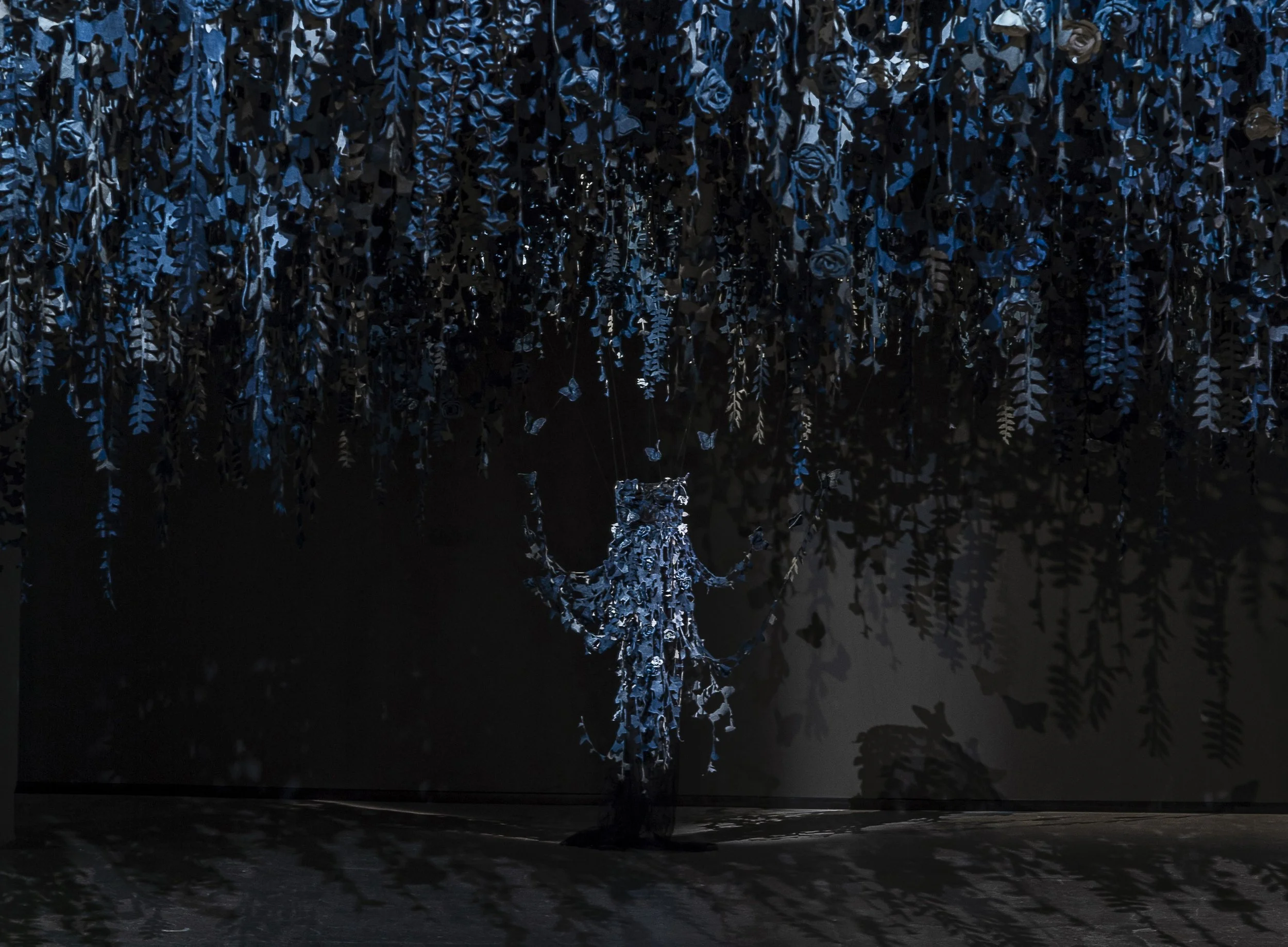
The latest Secret Garden together with the collaboration with Jonathan Christopher. photo Jan Berg
Ian Berry Opens Material World at the Swedish Textile Museum - Textil Museet
Ian Berry returned to Sweden, the country he lived for 5 years to open the solo exhibition Material World at Textil Museet in Borås Sweden - the National Museum of Textiles and the Nordic region’s leading museum on the subject. Ian Berry’s specific medium is denim and the famous industrial city also has a textile and denim heritage.
Textil Museet shows some of Berry’s most well-known pieces never seen in Sweden before -large (denim) ‘canvases’, made with layers of recycled jeans, creating photorealistic yet often melancholy scenes out of the indigo fabric.
To celebrate showing a large collection of his works at Textil Museet Ian Berry has collaborated with Dutch fashion designer Jonathan Christopher to create garments inspired by his most notable bodies of work; Behind Closed Doors, Hotel California and the Secret Garden installation, that will debut at the museum.
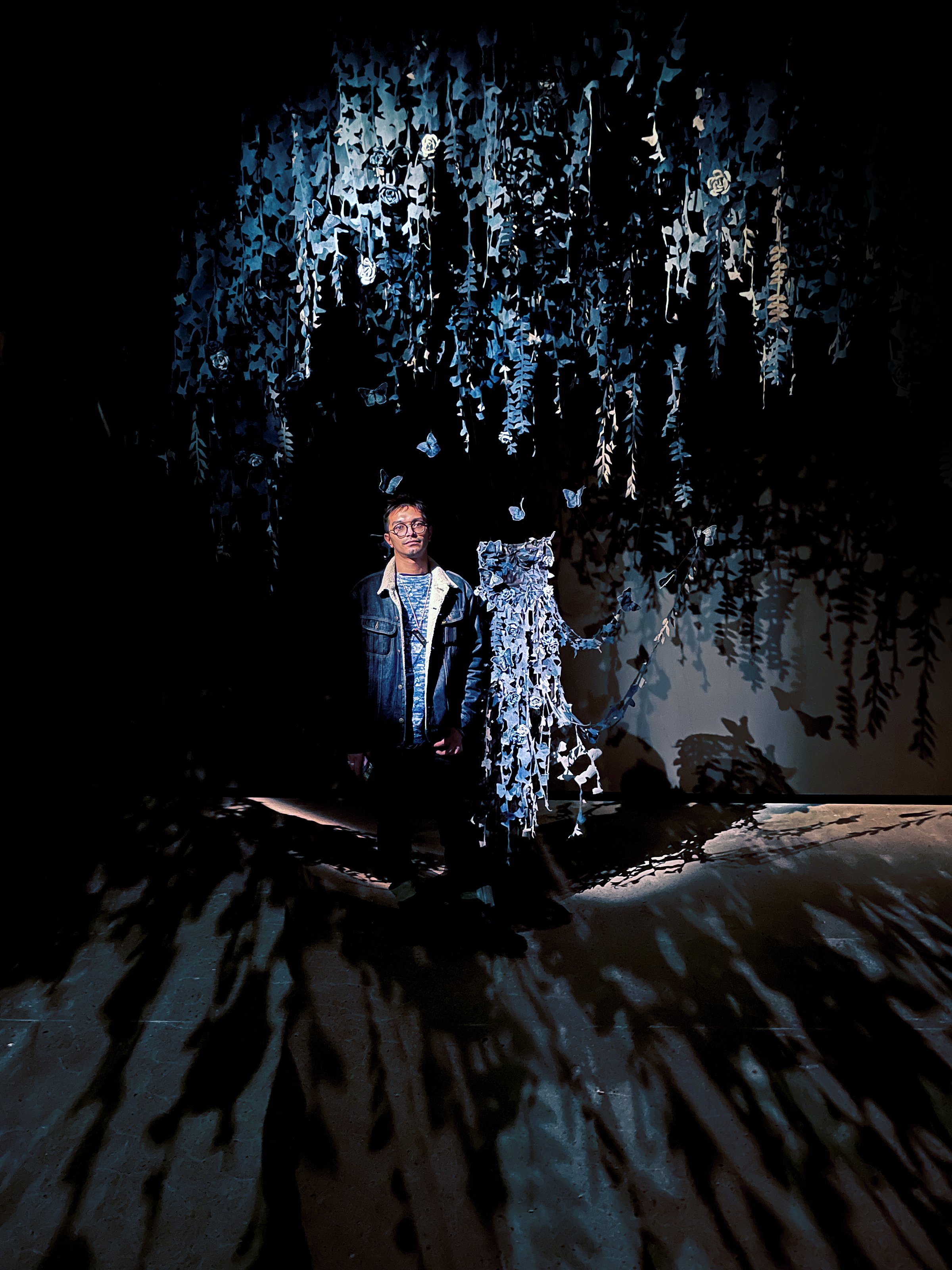
Jonathan Christopher at Material World with one of his many garments inspired by the show.
The Secret Garden installation touches on subjects such as sustainability and the environment, showing this material made from plants turning back into plants, with hanging wisteria, flowers and vines falling from the institution’s ceiling. Sustainability is also at the core of Ian Berry’s friend Lill O.Sjöberg’s innovation. Making denim wood, Twood, is the Swedish designer’s latest innovation and the pair have come together to make some special pieces to exhibit to compliment Ian Berry’s archive of work - visitors can view a guitar and drum kit, made of only TWOOD!

The Denim Drum kit made with Twood at Material World, Textil Museet
Ian Berry Needs You!
Ian Berry is asking, who is your favourite Denim Legend?

Ian Berry with the Denim Legends temporary installation at Material World, Textil Museet
It could be from the cowboy actors, 50’s rebels, the punks of the 70’s to the influencers of today. Who inspired your denim looks or who do you feel had the biggest impact on denim? Over the last year he has been asking this question, and using his wealth of knowledge from working with the material over the last 15 years has already created dozens of portraits from Brooke Shields to Bardot, Marley to Moss, McQueen to the material girl living in her material world -Madonna. As he creates one of his largest works he wants the audience to help shape it. It may even mean some of the portraits already made will get rejected so the piece will form the greatest influences from Pop Culture, making the Denim Legends.
These portraits are exhibited in an area where visitors can submit their choices and the portraits will grow over the exhibition - you can play a part in shaping it!
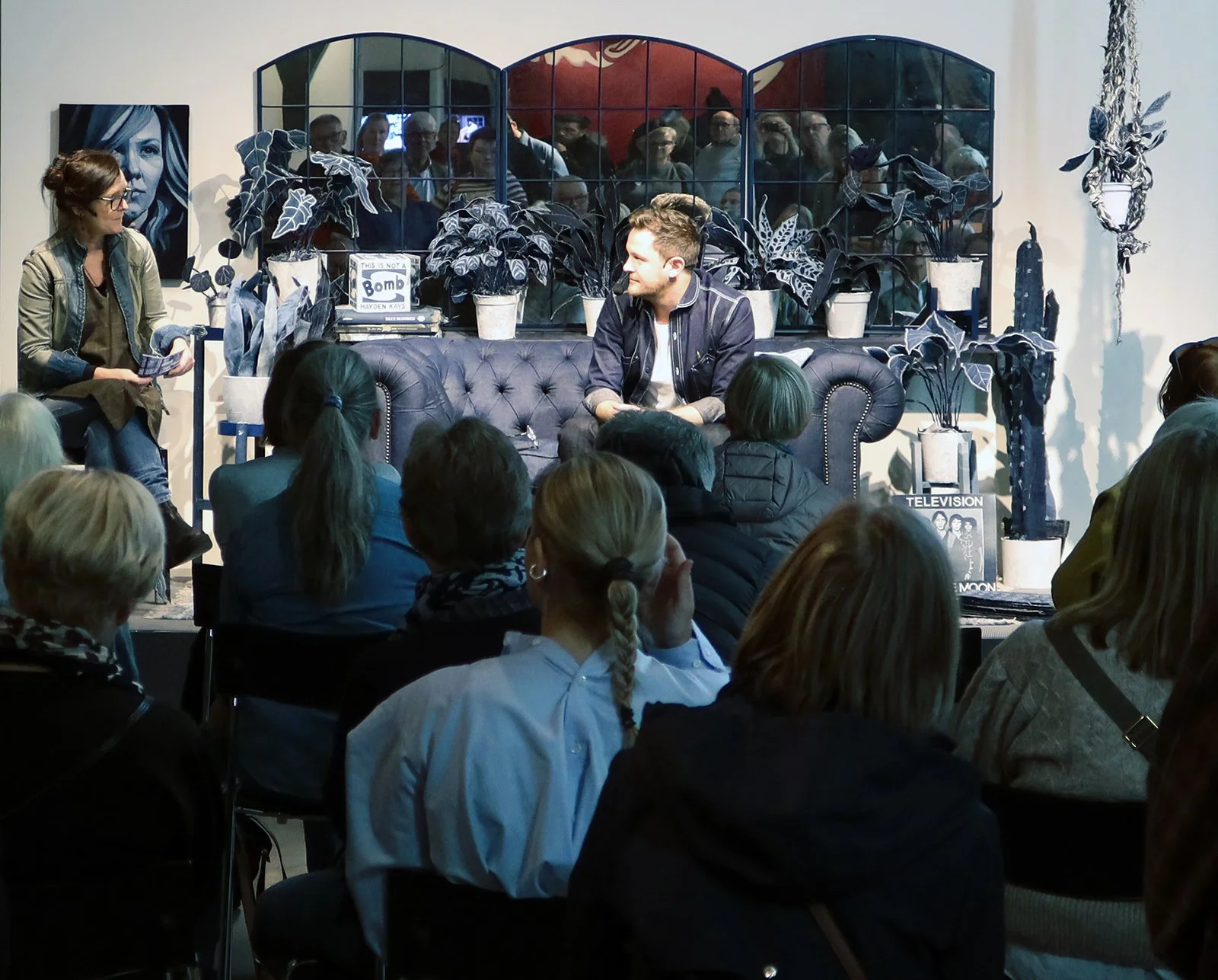
Curator Malena Karlsson interviewing Ian Berry at the opening of Material world at Textil Museet
“Ian Berry’s work is interesting and important on so many levels. There’s the ‘wow’ factor of the craft, the thematics, and the way in which his art shows how the textile material forms yet another dimension in art”
Malena Karlsson, Curator at the Textile Museum of Sweden.
Ian Berry appeared on the ‘30 Under 30’ list of the most influential artists in the world, has exhibited his work in both the USA and Europe, and is considered to be one of the 50 most influential people connected to the Jeans Industry. The Textile Museum of Sweden is happy to announce that the work of the artist known for his work with only denim jeans, Ian Berry will be exhibited at the Textile Museum of Sweden til May 1 2021.
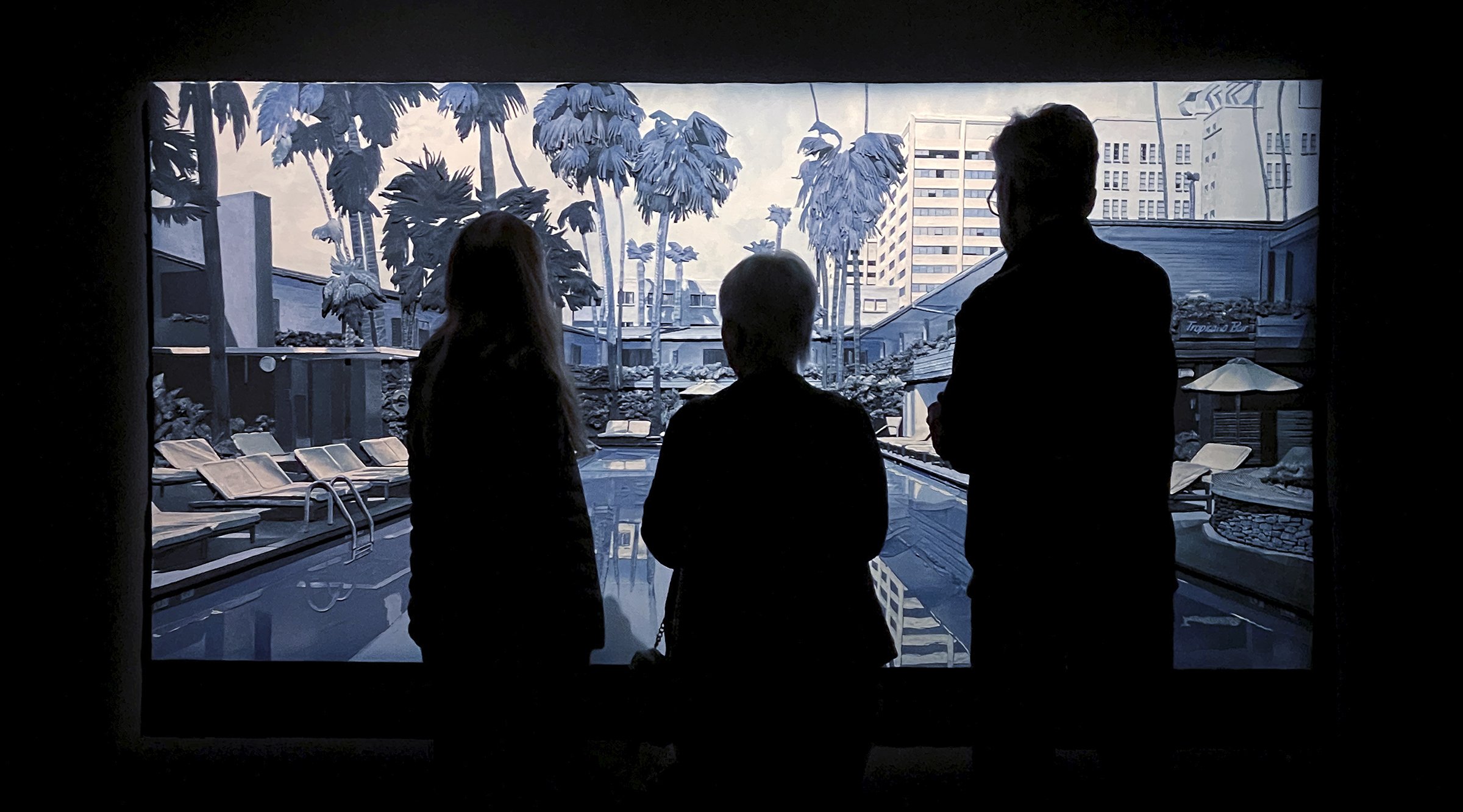
visitors viewing Paradis Lost at Textil Museet Material world by Ian Berry
You can see more on this dedicated micro-site of Material World including the collaborations with Jonathan Christopher, Twood, Tonello, Cone Denim and the amazing giant Denim jacket made with Henry Wong and AGI Denim.

Ian Berry | MATERIAL WORLD | Textil Museet Sweden
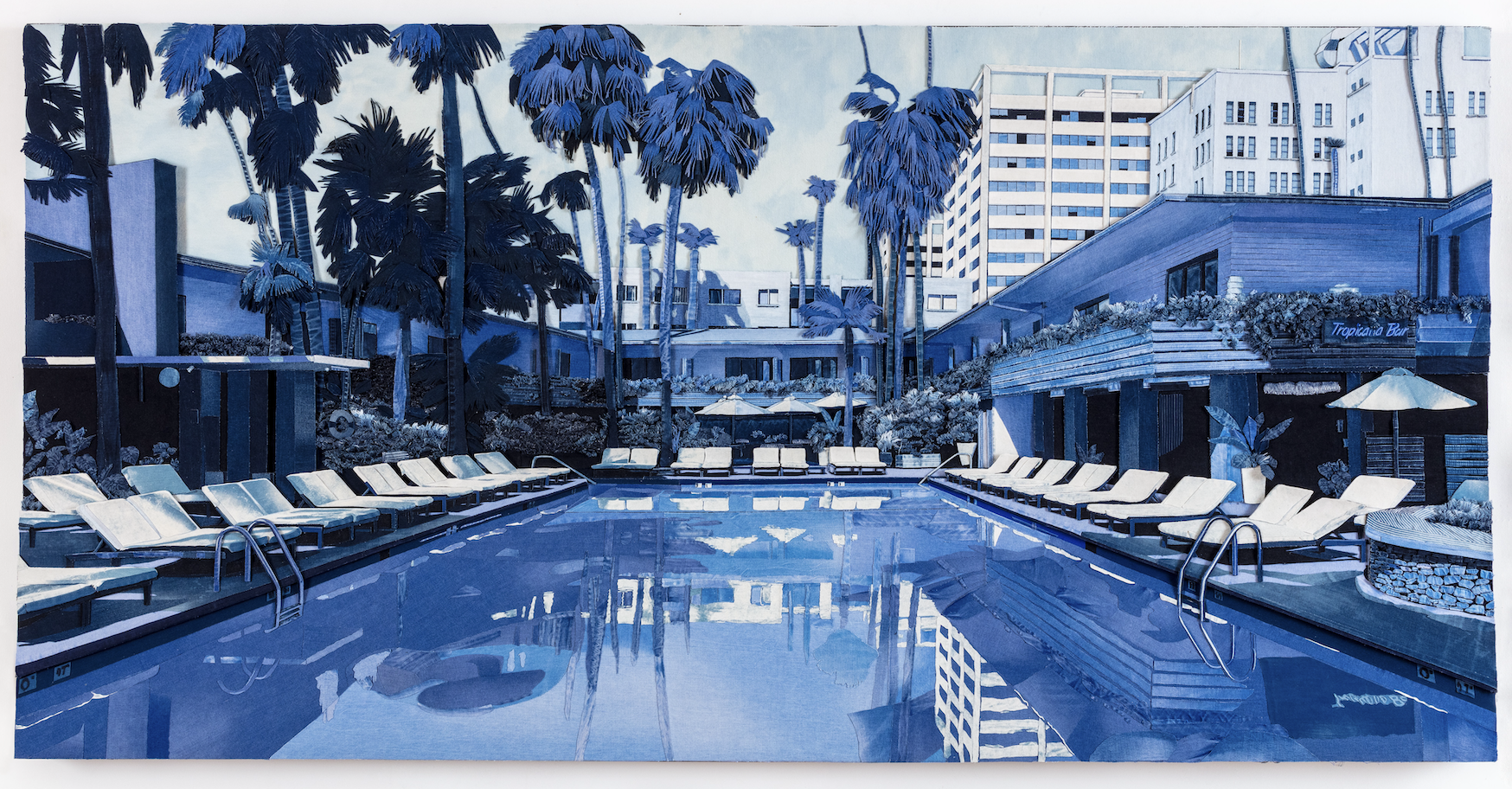
Paradise Lost
TEXTIL MUSEET
23 - October 2021 - 1 May 2022
Skaraborgsvägen 3, 506 30 Borås, Sweden
In October Ian Berry will return to Sweden, the country he lived for 5 years to open the solo exhibition Material World at Textil Museet in Borås Sweden - the National Museum of Textiles and the Nordic region’s leading museum on the subject. Ian Berry’s specific medium is denim and the famous industrial city also has a textile and denim heritage.


Works from Behind Closed Doors all made in denim, that Jonathan Christopher will use as inspiration.
Textil Museet will show some of Berry’s most well-known pieces never seen in Sweden before -large (denim) ‘canvases’, made with layers of recycled jeans, creating photorealistic yet often melancholy scenes out of the indigo fabric.
To celebrate showing a large collection of his works at Textil Museet Ian Berry has collaborated with Dutch fashion designer Jonathan Christopher to create garments inspired by his most notable bodies of work; Behind Closed Doors, Hotel California and the Secret Garden installation, that will debut at the museum.
The Secret Garden installation touches on subjects such as sustainability and the environment, showing this material made from plants turning back into plants, with hanging wisteria, flowers and vines falling from the institution’s ceiling. Sustainability is also at the core of Ian Berry’s friend Lill O.Sjöberg’s innovation. Making denim wood, Twood, is the Swedish designer’s latest innovation and the pair have come together to make some special pieces to exhibit to compliment Ian Berry’s archive of work.

Ian Berry’s Secret Garden at Museum Rijswijk in The Netherlands. Ian Berry works with Tonello in Italy and Cone Denim to create the hanging Trellis.
Ian Berry Needs You!
Ian Berry is asking, who is your favourite Denim Legend?
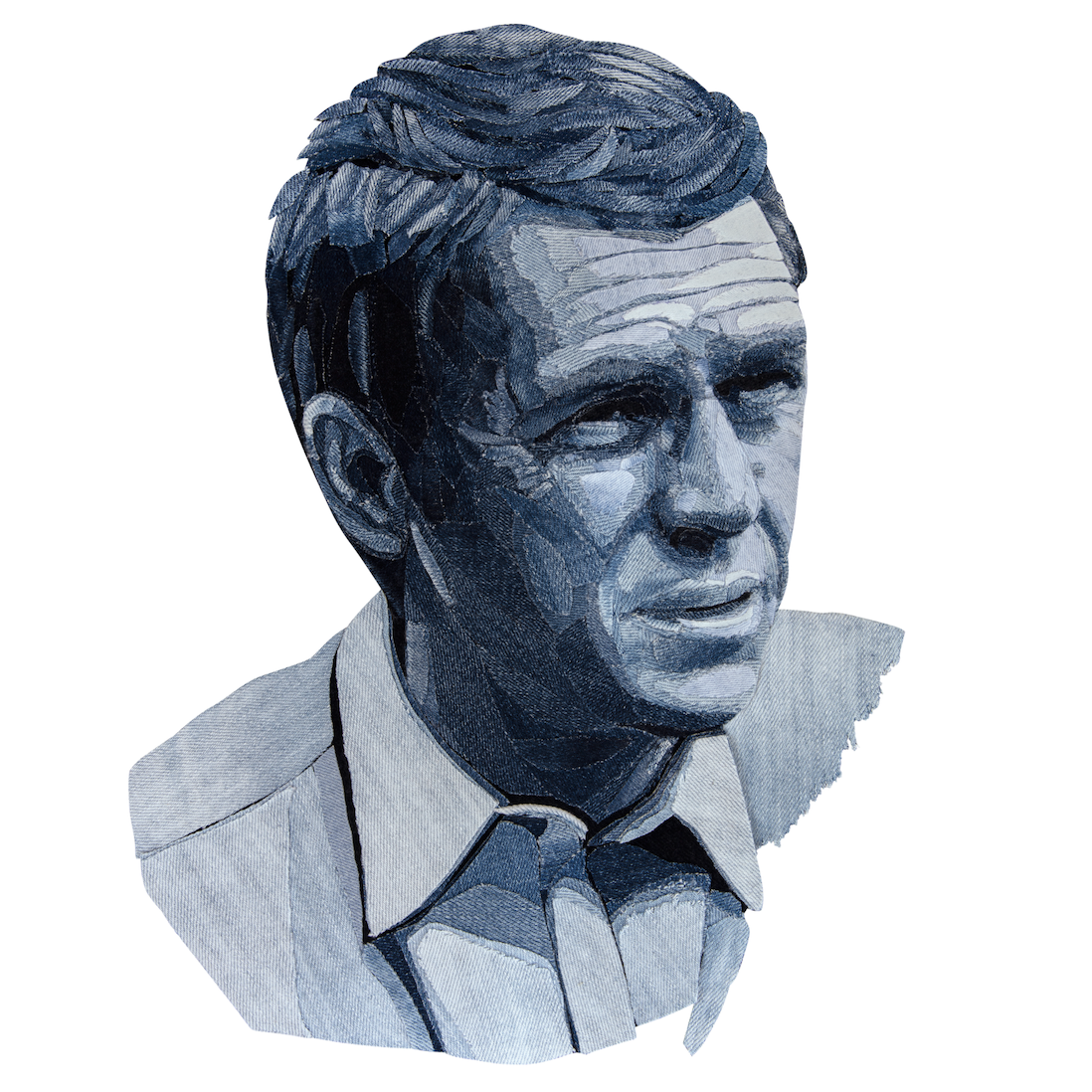
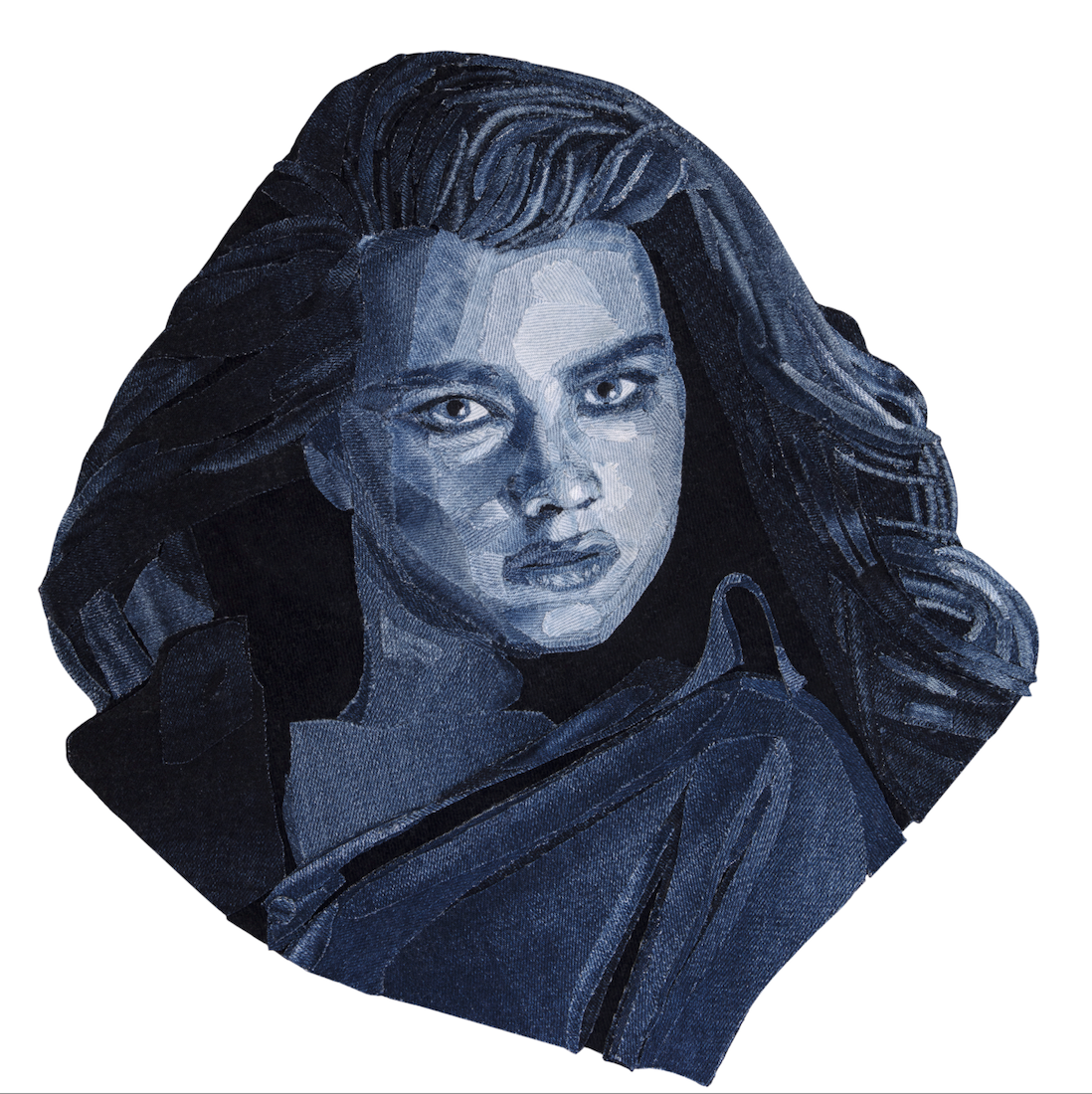
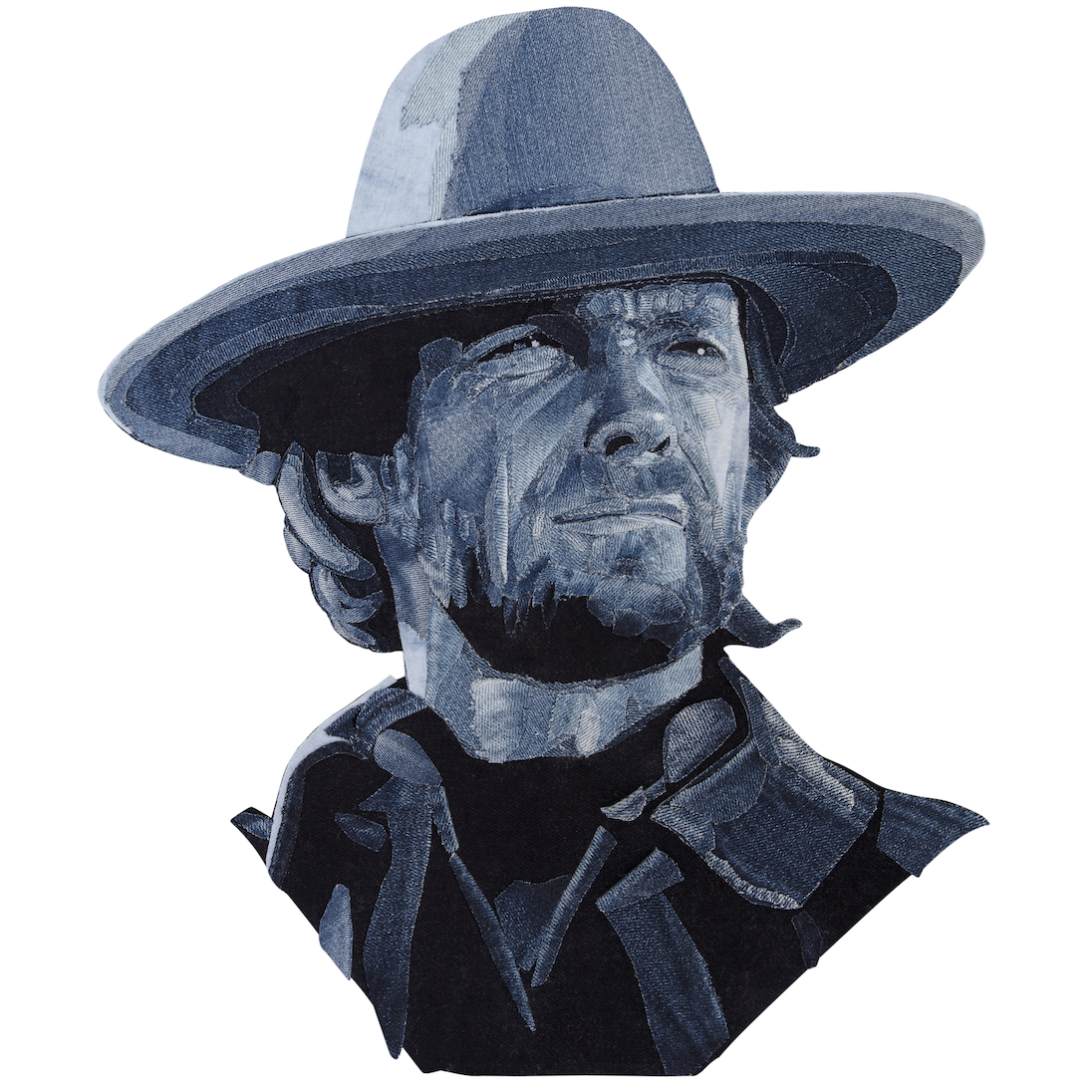
Steve McQueen, Brooke Shields and Clint Eastwood are Denim Legends. Who joins them?
It could be from the cowboy actors, 50’s rebels, the punks of the 70’s to the influencers of today. Who inspired your denim looks or who do you feel had the biggest impact on denim? Over the last year he has been asking this question, and using his wealth of knowledge from working with the material over the last 15 years has already created dozens of portraits from Brooke Shields to Bardot, Marley to Moss, McQueen to the material girl living in her material world -Madonna. As he creates one of his largest works he wants the audience to help shape it. It may even mean some of the portraits already made will get rejected so the piece will form the greatest influences from Pop Culture, making the Denim Legends.
These portraits will be exhibited in an area where visitors can submit their choices and the portraits will grow over the exhibition!
From Textil Museet Svensk 🇸🇪
“Ian Berry’s work is interesting and important on so many levels. There’s the ‘wow’ factor of the craft, the thematics, and the way in which his art shows how the textile material forms yet another dimension in art”,
Malena Karlsson, Curator at the Textile Museum of Sweden, says.
Ian Berry appeared on the ‘30 Under 30’ list of the most influential artists in the world, has exhibited his work in both the USA and Europe, and is considered to be one of the 50 most influential people connected to the Jeans Industry. The Textile Museum of Sweden is happy to announce that the work of the artist known for his work with only denim jeans, Ian Berry will be exhibited at the Textile Museum of Sweden this autumn!
It’s not a photograph, it's jeans!
At first sight, it is easy to mistake Berry’s work for blue- or indigo-tinted photographs, but a closer look reveals that they are made up of layer upon layer of denim in different shades. The contrasts between the different shades of blue visible in a pile of old jeans were the genesis of Berry’s unique art form. Soon, he began to explore the possibilities offered by the material and create photorealistic artworks. Berry only uses upcycled denim in his works. No colouring agents or bleach are used – only scissors, glue, and second-hand jeans.
When working with denim he began to understand the significance of his own and others’ relationship with the material, which is one that we are all very familiar with. Ian is of the opinion that the fact that that denim is highly recognisable opens doors to understanding and identification. His works reflect on contemporary events and phenomena but also refer back to the cultural history of jeans.
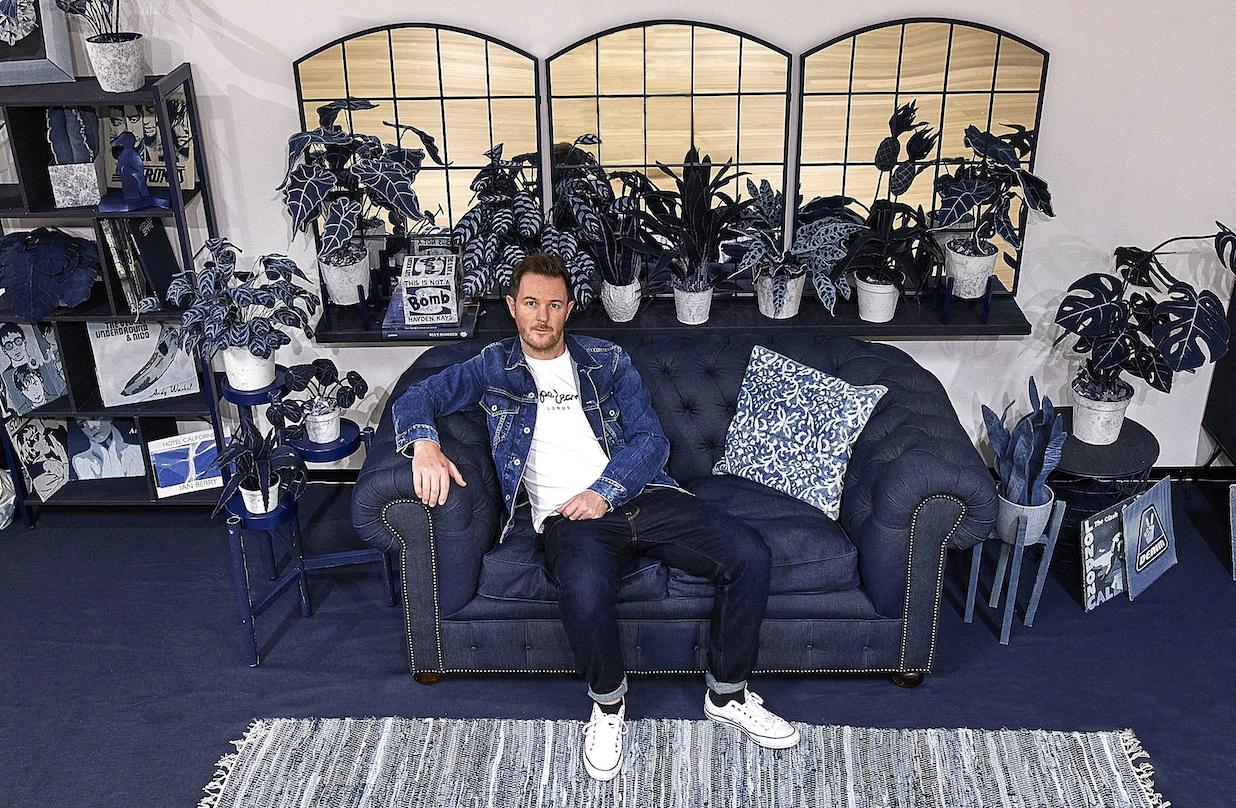
Ian Berry in his Living room art installation all made of denim jeans at Museum Rijswijk, The Netherlands
‘30 Under 30’ most influential artists in the world
Ian quickly became one of the most talked-about young artists, Art Business News listed him as one of the most influential artists in the world by including him in their ‘30 Under 30’ list in 2013 and In 2019, he was recognised by the denim magazine Rivet as one of the 50 most influential people in the denim industry.
Berry was born and raised in Huddersfield, England, which like Borås has a long-standing textile tradition. Ten years ago Ian moved to Sweden and exhibited his art at galleries in Skåne and Motala. Since then his art has been exhibited all over the world, most recently at Museum Rijswijk in the Netherlands and in Genoa, the Italian city that leant its name to this favourite garment, jeans. The Textile Museum of Sweden is the first Swedish museum to exhibit a large, in-depth exhibition of Ian Berry’s works.
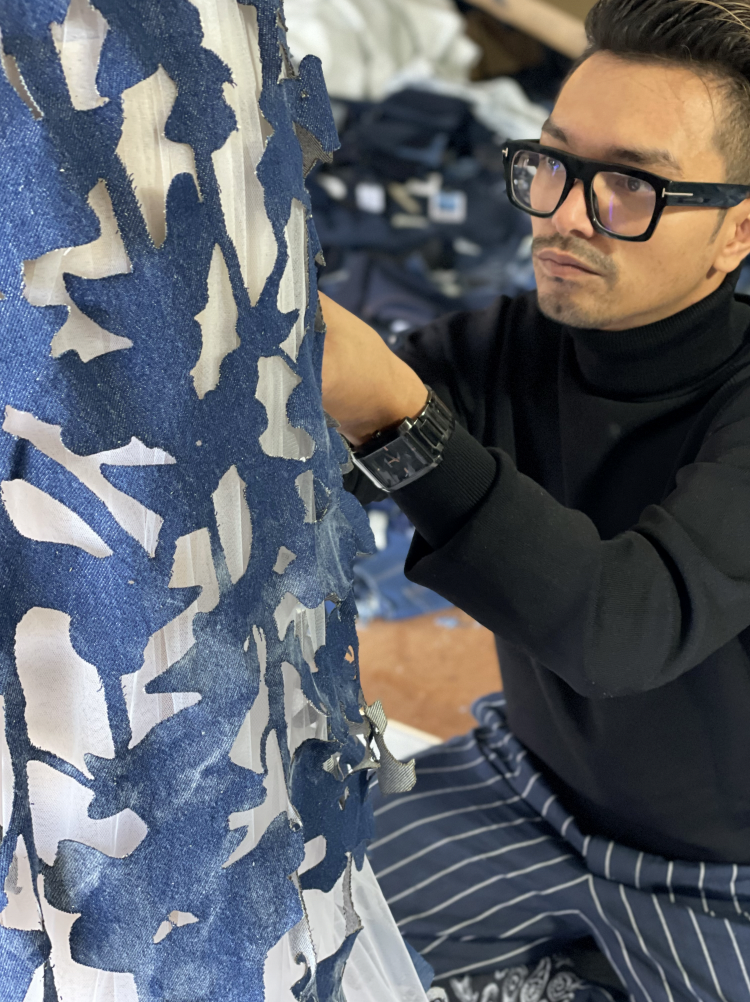
Jonathan Christopher

The Twood Guitar
About Jonathan Christopher
Jonathan Christopher (Hofwegen) Celestial Risher is a menswear designer who is graduated from the Willem de Kooning Academy in 2009. After which he did his MA at Artez in Arnhem.
Next to his own brand, Jonathan Christopher, he has worked for brands such as Karl Lagerfeld and was chosen by Marc Jacobs to be one of the five finalists for Designer for Tomorrow by Peek en Cloppenburg.
In 2014 he won the very first Global Denim Awards and in 2015 he won the Woolmark European Finals.
He now works on a new brand St.Ape, basing the idea around using deadstock fabrics from high end designers, to make his collections of limited editions, like he has throughout his career. Reusing old materials makes him a perfect and authentic collaborator for Ian Berry.
jonathan@jonathanchristopher.nl
https://www.jonathanchristopher.nl/index.php/about
About Twood
This material research project by Swede Lil O.Sjöberg and her collaborators, explores the possibilities to extend the lifecycle of denim fiber with a new innovative recycling technique, creating a new material TWOOD [textile-wood]
The aim in this ongoing part of the project, is to identify and develop the industrial processes. The goal is to produce material prototypes and evaluate the material specifications in order to target usability for the next step. With the material she has been able to make items that range from tables to a beautiful denim Twood guitar.
Genoa | Genova | Garibaldi in Jeans by Ian Berry
Ian Berry has been delving into the history of denim, in fact, so far back it can be said the history before jeans. While Jacob Davis’s rivet may have helped Levi Strauss develop what we now know as the modern jean, few know why one of the most loved garments on the planet are called; Jeans.
Back in the 15th century, shipbuilders and merchants in the Italian city of Genoa used a cheap, coarse and strong, cross weaved type of cotton to make sails and protect their goods. This kind of fabric was produced in the French city of Nimes, (where Ian Berry visited in 2018) resulting in the name ‘denim’ from Serge de Nim, and used in combination with moleskin. In the Internationally important port city of Genoa, similar textiles were dyed blue by indigo traded with India. Their use extended to work clothes, and they were exported under the French name ‘bleu de Gênes’ that became blue jeans when once again translated to English.

Ian Berry in the rustic historical city of Genoa/Genova
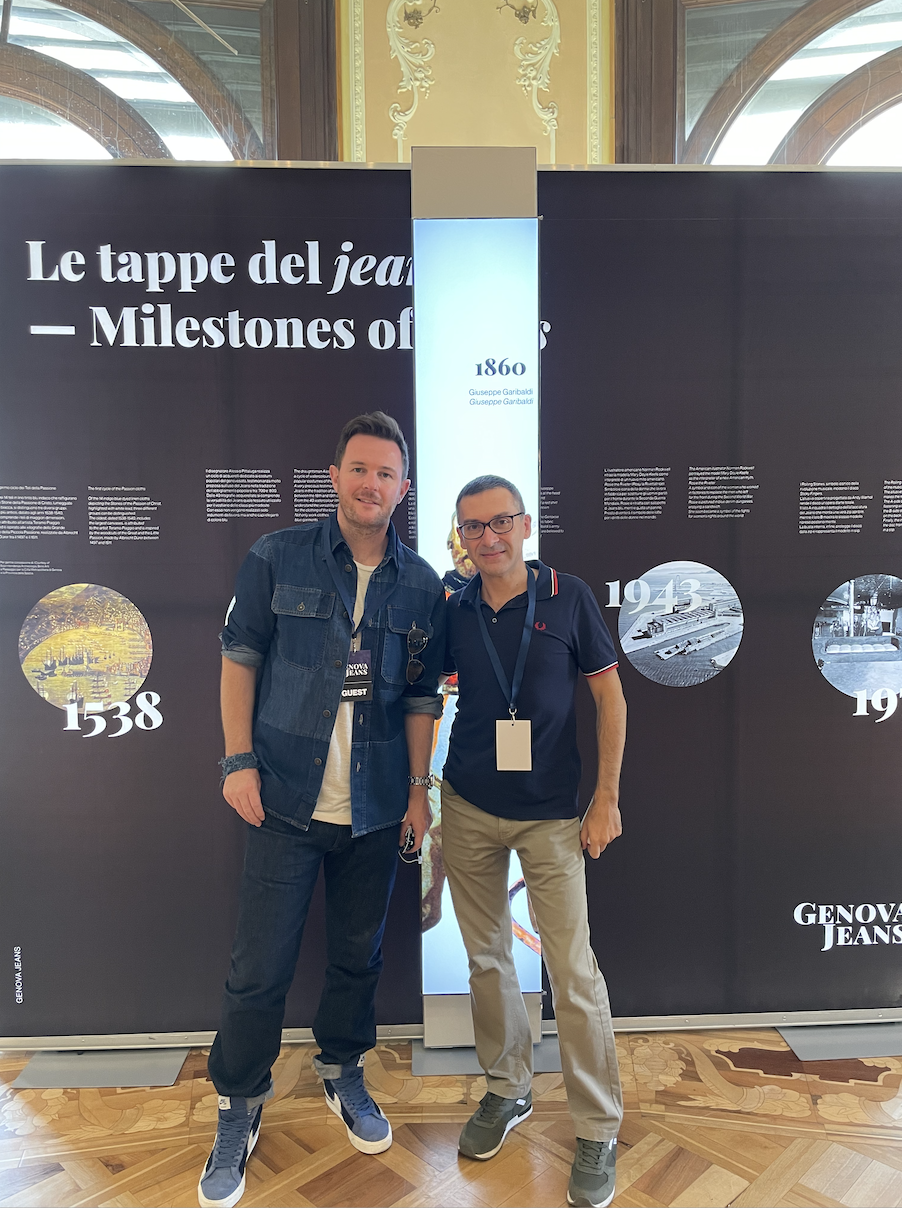
Cristiano Palozzi with Ian Berry
‘When I ask people where the names come from I, and I’ll admit few seem to know already, tell them it comes from England as it is the words we called them as, and I quote from back then, ‘they didn’t want a French sounding cloth’. Ian Berry joked.
Ian Berry was commissioned to make a piece of a man connected to the city, an icon of his day and internationally renowned; Giuseppe Garibaldi, often noted as the most popular and famed Italian ever. Berry has been talking to the city for several years and then the Municipal’s Manuela Arata, who visited his London studio.
Back in 2017 plans were being formed to do an event in Genoa, and Ian Berry was working with Cristiano Palozzi toward this goal. But then horror struck, on 14th August 2018, the Morandi motorway bridge in Genoa, Italy, collapsed during a torrential rainstorm killing 43 people and shocking a stunned city and the world. Obviously the city was reeling and the project was sidelined.
‘I was in Nimes at the time so very invested in both of the cities and in my heart. The bridge tragedy was awful but only made my commitment to Genoa greater.’
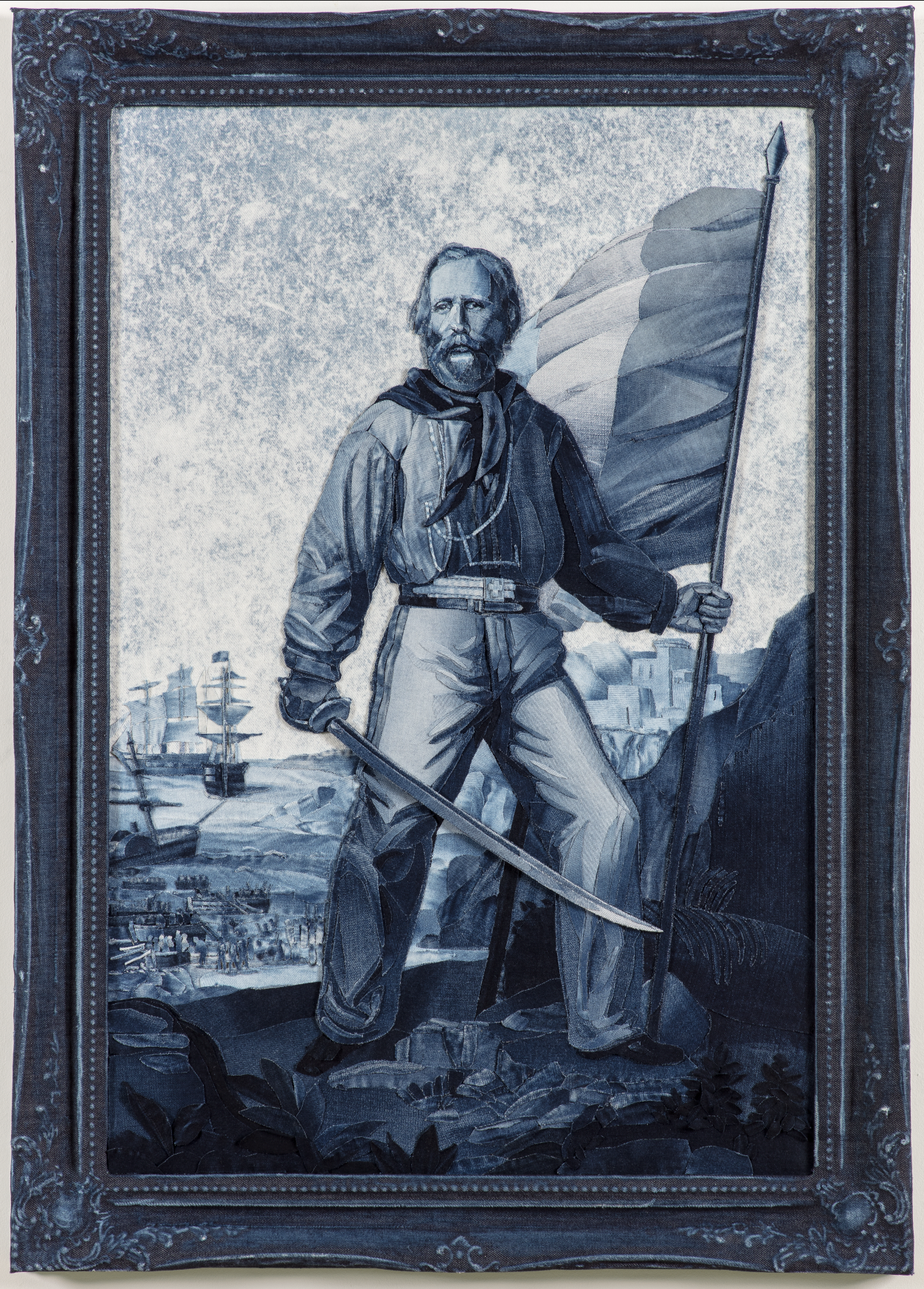
Ian Berry’s Garibaldi in Jeans, (denim on denim, 106 x 77 x 6 cm) is placed at the Museo del Risorgimento. The museum was the birthplace of Giuseppe Mazzini whose efforts, like that of Garibaldi, helped bring about the independent and unified Italy.
It is based on the painting by Gerolamo Induno’s GARIBALDI A MARSALA (11 May 1860), oil on canvas, 1861, in the Museo Nazionale del Risorgimento Italiano in Turin, who supported this portrait. In the painting, like other iconographic testimonies dedicated to Garibaldi and the Red Shirts, including those in the Museo del Risorgimento in Genoa, the protagonist wears trousers made of the typical blue fabric, whose Genoese origins are recognised.
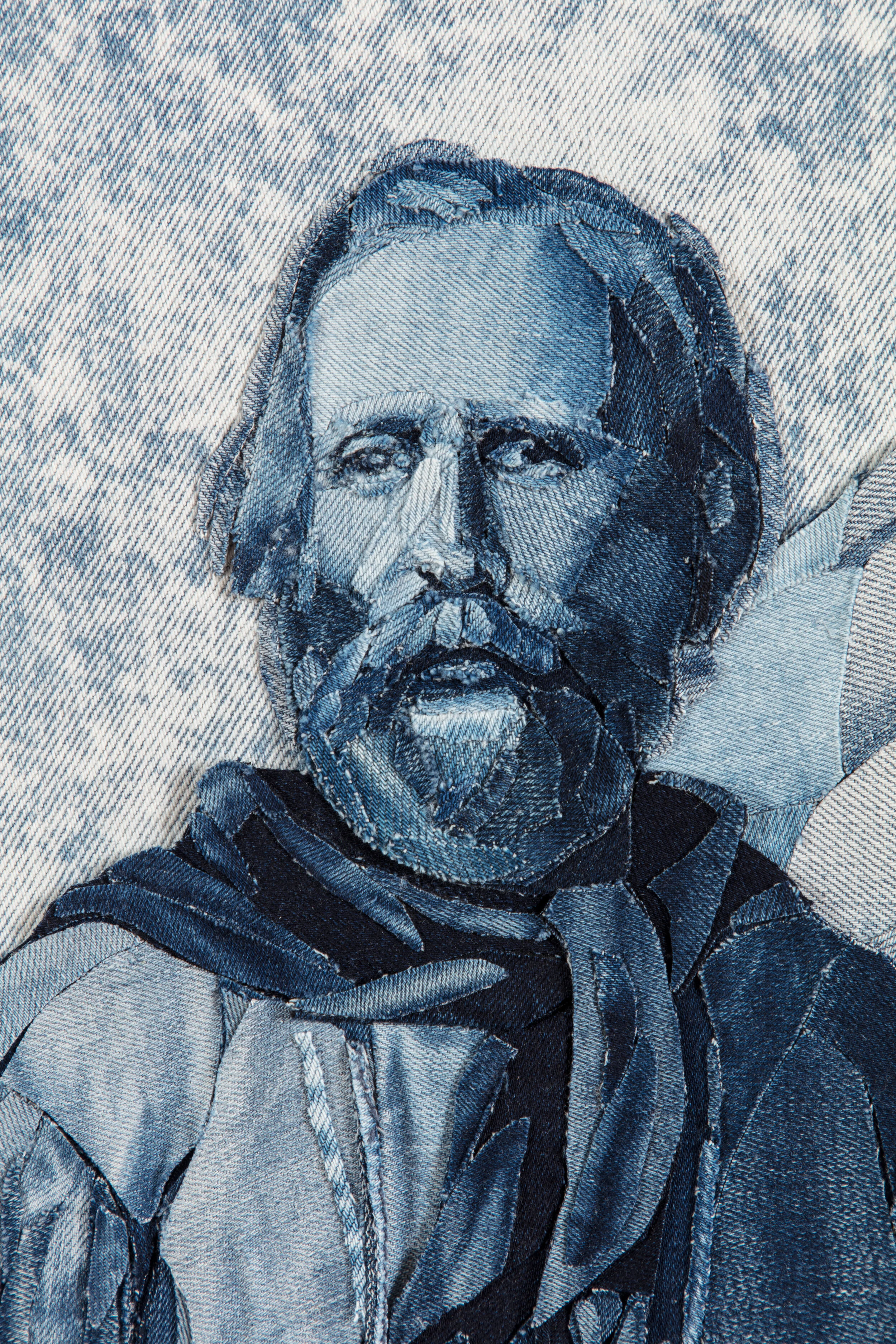

Giuseppe Garibaldi and his liberation army land at Marsala, Sicily, on 11 May 1860.


Gebrüder Alinari image of Giuseppe Garibaldi in his other famed garment, the poncho
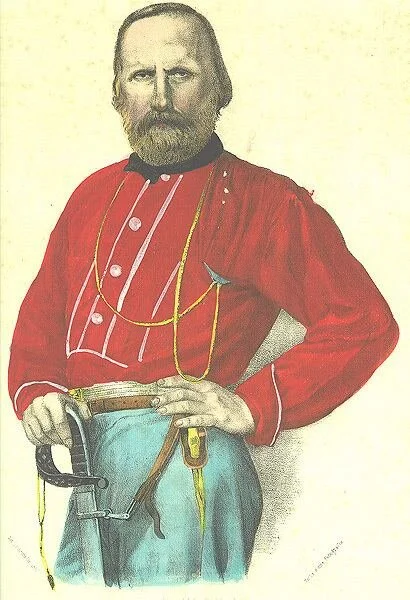
When uniting Italy the garment he wore resembled what would now be known as jeans.
About Garibaldi
Giuseppe Garibaldi 4 July 1807 in Nice – 2 June 1882 on Caprera; Jousé or Josep in Niçard, Gioxeppe Gaibado in Ligurian) was an Italian general, politician and nationalist who played a large role in the history of Italy. He is considered one of the greatest generals of modern times and one of Italy's "fathers of the fatherland" along with Camillo Benso, Count of Cavour, Victor Emmanuel II of Italy and Giuseppe Mazzini.
While large volume books can be wrote about this Hero of the Two World’s, his connection with jeans is what we are here to look at. The famously dressed leader had an iconic look, seen in many paintings. A Times correspondent wrote from the south of Italy on September 13 1860 when Garibaldi was busy uniting the country, “I had my first interview with the disinterested and brave liberator of Italy in his red shirt, a dirty pair of jean trousers and worn out boots. Combing his long, thin hair at the glass stood the greatest patriot since Washington”.
The celebrity was much loved in England, the home country of the artist. There are strong links between the Ligurian City and England, one being the shared Red Cross flag of St George. It was also big trading route and link between transferring the fabric, garment and the look to England and to America. The British Press loved him. Ian Berry added;
He went to London and out to Bedford and many people wanted to meet him but I loved a story of when he went to Tyneside from America. Crowds greeted him. He was a hero. A symbol. What was he going there for? To get coal. This is where my paternal family is from for generations and what were they? Coal miners.
Want to learn more about Garibaldi, have a watch of this nice Youtube Clip with BioGraphics
It must be remembered that this patriot was originally a Ligurian sea captain who dressed, as his colleagues did, in trousers made of the tough blue cloth named “blu de Gene”, blue of Genoa, thus the appellation, blue jeans. While we all wear jeans today and may not find it surprising, it was another 100 years before Levi Strauss got a patent for adding a rivet with Jacob Davis to indigo dyed work overalls and helped create what we now know as jeans, with the style and material forming differences, but the name, remained.
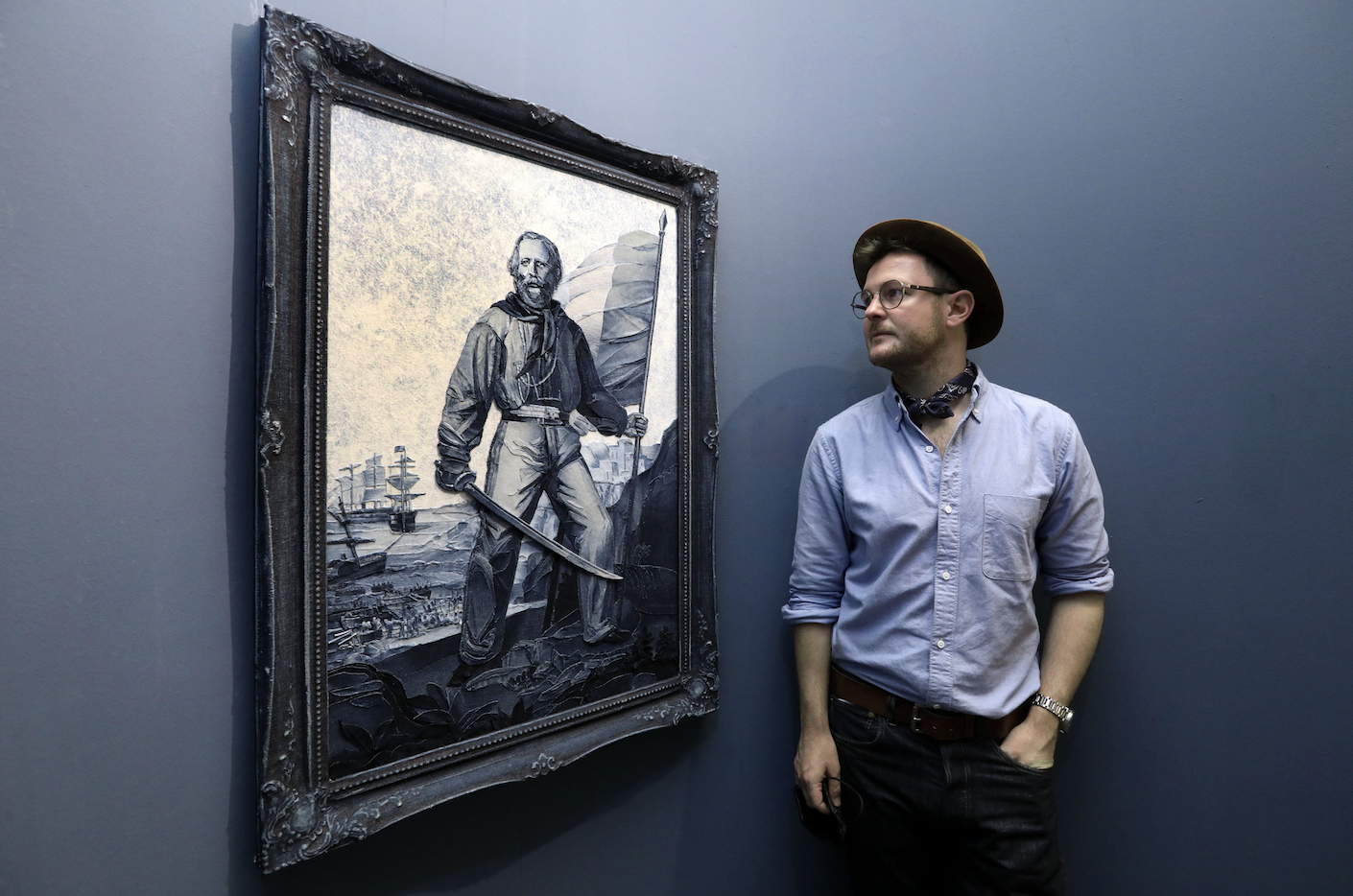
Ian Berry at Museo del Risorgimento with the work in denim of Garibaldi.
Ian Berry’s portrait of Garibaldi was unveiled during a new event initiated by the Genova Municipality called Genova Jeans that celebrates the history of the city with denim and jeans as well as looking toward the future with talks and presentations on sustainability.
Stores in the city turned their windows blue with denim, interactive display panels showed the history of denim and historical figures and videos, including that of Ian Berry were shown. The northern Italian region is famed for their denim production, especially that of the 80’s and 90’s. Brands like Diesel showed their archives and denim mill Candiani showed an immersive display of issues with denim as well as some solutions.
Berry’s highlight was seeing the Passion Canvases, painted with indigo and white lead. The collection is made of fourteen canvases, and dates back from 1538 to late XVIIth century. They were inspired by Albrecht Durer’s engravings portraying the Little Passion. The canvases were purchased in 2001 by the Italian State and they belong to the Fabrics Collection of the Archaeological Authority of Liguria, which placed them temporarily in the Museum for now.
According to recent studies, these canvases represented the “sepulcrum” or Altar of Repos, an ephemeral setup for Holy Week. Probably they were placed inside the church to create a small chapel for the devotees.
Curator, Paolo Martini at the Museo Diocesano gave Ian Berry a private tour.
‘For many years now I have been wanting to see these and they were so much more powerful and emotional to see in real life. To have so much time and description given by Anna it was a perfect experience. It’s something that many people should see and appreciate.’
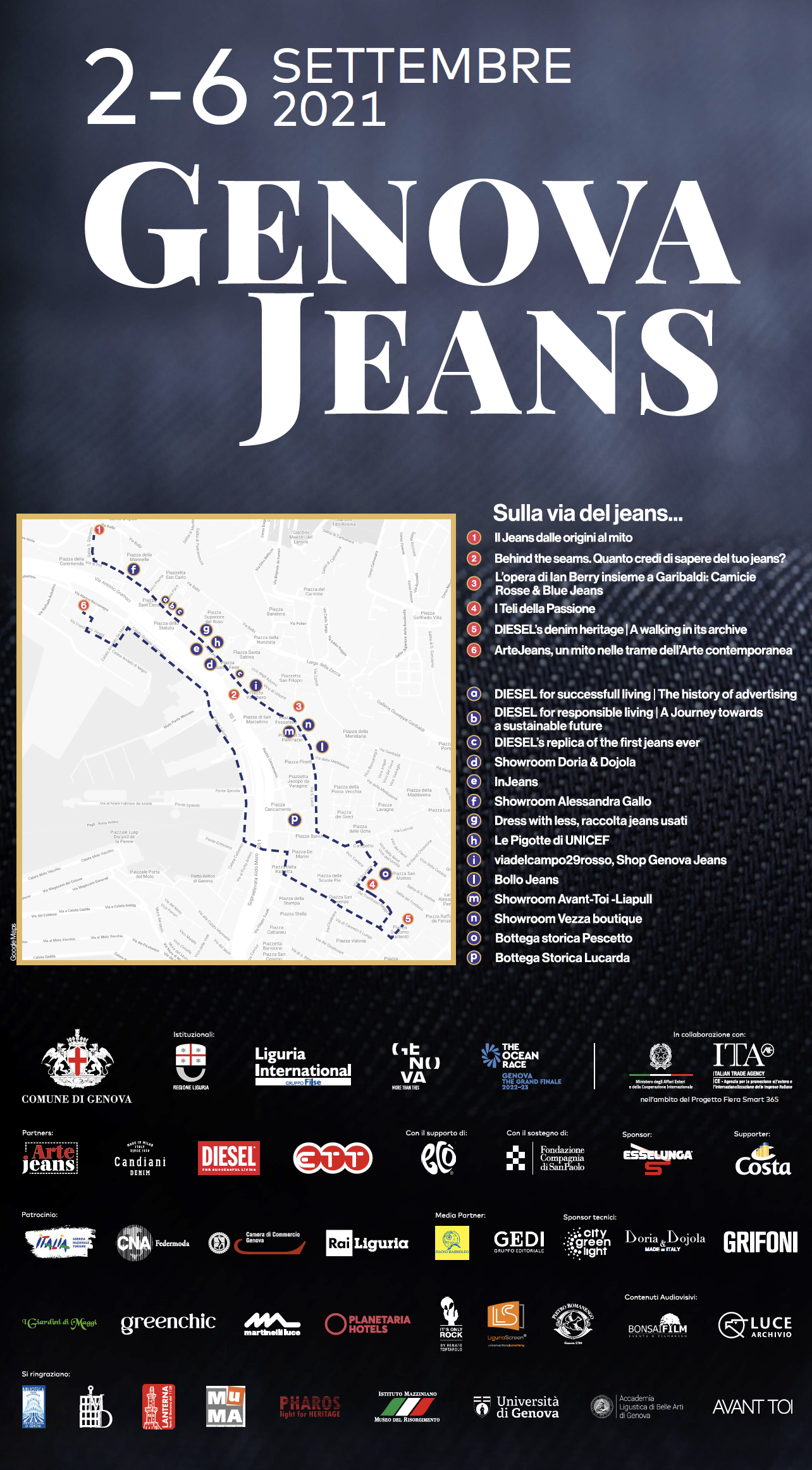

You can see more of the program on the Genova Jeans website here

About Museum of Risorgimento | Museo del Risorgimento
The Museum traces the historical events that led to the unification of Italy, from the Genoese anti-Austrian revolt in 1746 to the inauguration of the Monument to the Thousand of Quarto in 1915.
Inaugurated on 5 May 1915 in Palazzo Bianco, it has since 1934 been located in the birthplace of Giuseppe Mazzini. It preserves and exhibits a rich historical and artistic heritage through which the symbolic figures of Risorgimento are brought to life: Giuseppe Mazzini and the republican and democratic movement; Giuseppe Garibaldi and the Red Shirts; Goffredo Mameli and the Italian Anthem (which Ian Berry heard a little too much this summer!).
The substantial historical, artistic and documentary heritage preserved in the institute was created through donations and purchases as early as the nineteenth century. Paintings, prints, posters, sculptures, documents, photographs, uniforms, weapons, flags and relics cover a time span that goes beyond the strict chronology of the Risorgimento, and includes items from the 18th century to the Second World War and the Liberation.
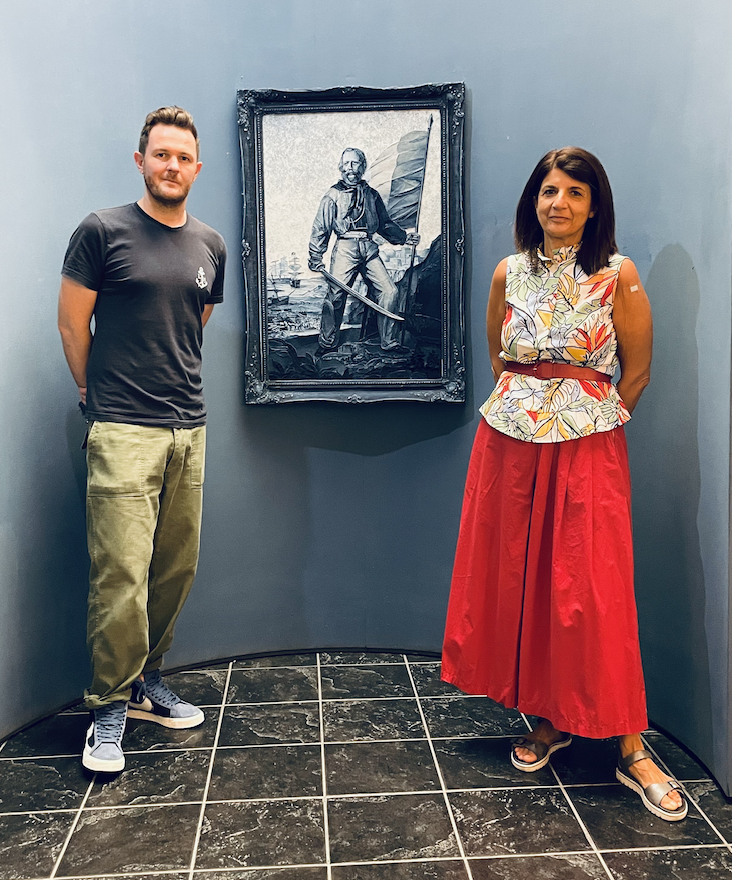
Ian Berry with Museo del Risorgimento Genova Curator, Raffaella Ponte.
Among the most significant works of the nineteenth century are the portraits of Goffredo Mameli by Domenico Induno, Giuseppe Mazzini by Emilie Ashurst and Gacinto Gallino’s own Giuseppe Garibaldi. Peter Tetar Van Elven, the famed Dutch painter’s faithful depiction of the departure of the Thousand from the rock of Quarto, which is flanked by the works of Plinio Nomellini created for the inauguration of the Monument to the Thousand (May 5, 1915), and the sketch by the sculptor Eugenio Baroni, winner of the national competition.
The museum hosts highly evocative objects including the Red Shirts and the precious Flag of the Thousand in silk (1860) as well as Mazzini's guitar, always with him in his long London exile, which is still played today on special occasions.
Among the documents, a prominent place belongs to the first autographed draft of the Canto degli Italiani by Goffredo Mameli (1847) and to the Act of Surrender of the German troops signed in Genoa on 25 April 1945. Ian added;
It is a great honour to first portray one of the most famous Italians, as well as at the time, one of the world’s most famous men - named the Hero of the two World’s amongst many of the artefacts of such an important period. Someone who understood leadership as well as communication. He was one of the first ‘celebrities’ and icons of the 19th Century but he achieved it by his efforts of being an audacious leader as well as creating a romantic image that would last. He wore what came to be known as ‘Communication style’ and while the red shirt and sometimes poncho became an icon, it’s the trousers he wore that lead this piece. I believe in Genoa’s jeans past, and not only the connection to the word. Growing up in the 90’s I always thought of Italy when thinking of jeans, and I want to help to celebrate the region. I love telling others little tidbits of stories connected to denim and I’m often surprised when they don’t know where the word jeans come from. Let’s get everyone to know!'
News
News from the studio of Ian Berry

NEW!
Ian Berry’s, SPLENDID ISOLATION is out now and available to order online. The book is a collaboration with publisher Jap Sam Books in The Netherlands with the Museum Rijswijk to coincide with the Solo Museum show of the same name.
The book includes
· a foreward by Museum Rijswijk curator Diana Wind and Director Arnoud van Aalst
· 160 page paperback book
· Over 150 images in full colour (well, full of blue)
· Looks over some of his 15 years of making his artwork using only denim
· Many images show detail shots of his work that have to be seen to be believed.
The book was launched at the 2020 Virtual Art Book Fair (VABF) organized by Tokyo Art Book Fair (TABF) with Jap Sam. The fair was originally scheduled for Fall 2020 at the Museum of Contemporary Art Tokyo. It then debuted at the Museum shop at Museum Rijswijk and was popular with visitors. You can now get it here.
The book comes signed by the artist Ian Berry and you can also request a message to be sent. We can post around the world with the postages below, including a special launch offer.
Postage
· £2.50 to the UK (Free with FREESHIPPING code at check out)
Postage outside the UK will come up at Check out.
Along with Museum Rijswijk and Jap Sam Books the book was made possible by the museum show principle sponsor Pepe Jeans London, along with Tencel, Famore Cutlery, Cone Denim and Tonello.